
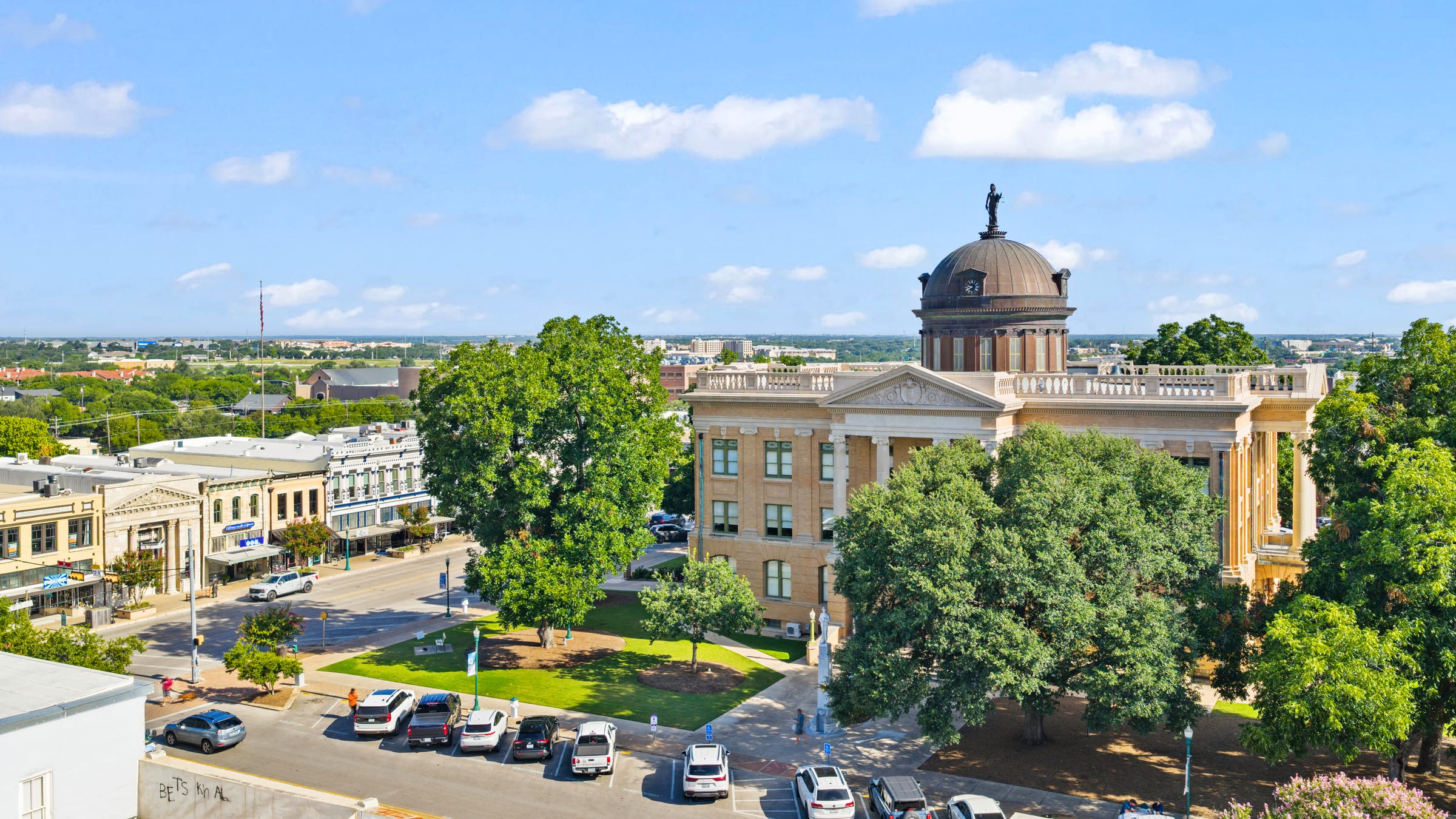
Georgetown vs Leander at a glance
The table below summarizes the practical differences buyers weigh most. Treat dollar figures, tax rates, and ratings as starting points to confirm, not fixed numbers.
| Factor | Georgetown | Leander |
|---|---|---|
| Identity | County seat; historic courthouse square; "Most Beautiful Town Square in Texas" | Younger NW Austin suburb; fast suburban growth |
| Location | ~26–30 mi N of Austin on I-35 | NW metro; Williamson + Travis counties |
| Commute to Austin | I-35 or 130 tollway by car | Car via 183A toll/US-183, plus Capital MetroRail Red Line (rail) |
| Housing stock | Historic homes, 55+ (Sun City), and new master-planned growth | Mostly newer master-planned subdivisions and new construction |
| School districts | Mainly GISD; some addresses in Leander ISD or Liberty Hill ISD | Mainly Leander ISD |
| Median price | Low-to-mid $400,000s | Higher, roughly mid-to-upper $400,000s |
| Best for | Square lovers, retirees, space, established-town feel | Commuters wanting rail, newer-home buyers, growing families |
Verify school zoning by exact address, and confirm tax rates with the county and each district. Always check current pricing with a local agent.
Living in Georgetown, TX
Georgetown is the county seat of Williamson County and one of the fastest-growing cities in the country, named the nation's fastest-growing city (50k+) by the U.S. Census Bureau in recent years. Its identity centers on the Williamson County Courthouse Historic District, a late-Victorian square with 180-plus historic buildings, the spring Red Poppy Festival, and Southwestern University, the oldest university in Texas.
Housing here spans more eras than in many newer suburbs. You will find historic homes near the Square, established golf communities like Berry Creek and Cimarron Hills, the large Sun City 55+ community, and active new-construction master-planned neighborhoods such as Wolf Ranch along the San Gabriel River. That mix gives buyers a wide price range and several lifestyle paths in one city. Explore current options on the Georgetown, TX real estate page.
For commuting, Georgetown leans on the car. I-35 runs straight through town toward north Austin, and the 130 tollway offers an alternative around heavier traffic. There is no passenger rail station in Georgetown, so plan your commute around drive time and confirm typical travel windows for your specific route and hours.
What buyers miss about Georgetown
Many buyers assume every Georgetown address is in Georgetown ISD. In reality, homes can fall into GISD, Leander ISD, or Liberty Hill ISD depending on location. The city also runs its own utility through Georgetown Utility Systems, and it became one of the larger U.S. cities to source 100% renewable energy. These details shape both lifestyle and monthly cost, so verify them by address before you commit.
Living in Leander, TX
Leander sits in the northwest Austin metro, spanning parts of Williamson and Travis counties, and ranks among the fastest-growing cities in the region. Its defining feature for commuters is the Capital MetroRail Red Line: the Leander Station is the northern terminus of the line, with stops toward downtown Austin via Lakeline, the Domain area, and beyond. Service runs on a set schedule, which gives Leander a car-light commute option that Georgetown does not offer.
The housing story in Leander is largely newer. Master-planned communities such as Travisso, Crystal Falls, Bryson, and Deerbrooke deliver resort-style amenities, trails, and a steady pipeline of new construction. The walkable Northline district is being built around the rail station as a transit-oriented, mixed-use center. If you want recent floor plans, energy-efficient builds, and amenity-rich neighborhoods, Leander stocks plenty of them. Start with the Leander, TX real estate overview.
Schools are a frequent draw. Leander ISD is widely regarded among the stronger districts in the metro, particularly at the middle and high school levels. As always, confirm campus assignment by address and check current accountability ratings on txschools.gov.
In practice
Leander generally carries a higher entry price than Georgetown by some measures, reflecting newer inventory and amenity-heavy communities. Buyers weighing the two often compare price per square foot, HOA dues, and any MUD or PID assessments, since newer master-planned areas frequently layer those costs on top of base property taxes. Total the full carrying cost, not just the list price.
Commute compared: I-35 vs the MetroRail Red Line
The clearest functional difference between these two towns is how you get to Austin. Georgetown commuters drive I-35 or the 130 tollway, which keeps you flexible on timing but ties you to traffic and fuel. Leander commuters can drive 183A and US-183, or board the Capital MetroRail Red Line and let the train handle the trip into central Austin.
If a rail option matters to you, Leander has a structural advantage. If you value a direct northern drive and don't need transit, Georgetown's I-35 access is simple and central. Confirm current rail schedules, park-and-ride availability, and your realistic door-to-door times before assuming either commute.
Taxes and cost compared
Texas has no state income tax, so both cities fund local services largely through property taxes. A total tax bill is the sum of overlapping entities: county, city, school district, and any MUD, ESD, or special district. In Williamson County, the county and city portions are published annually, but the school district slice is usually the largest, and newer Leander subdivisions may add MUD or PID costs.
For a true comparison, request the full tax breakdown for any specific property in both towns and confirm rates with WCAD and the county tax office. Homestead, over-65, and disabled-veteran exemptions apply in both, and homesteaded values are capped at 10% annual appraisal growth. Review the Georgetown property taxes page for more, and verify any specific rate with a tax professional.
Who each town suits
Georgetown tends to suit buyers who want an established small-town identity, a historic walkable square, 55+ living, more open space, or a wider mix of home eras and price points. It also suits those whose work is north of Austin and who prefer a straightforward I-35 drive.
Leander tends to suit commuters who want a rail option, buyers focused on newer construction and master-planned amenities, and households drawn to Leander ISD. If a car-light trip to central Austin or the Domain area is on your list, Leander earns a close look. Both are solid Williamson County choices — see the broader Williamson County real estate picture to round out your search.