
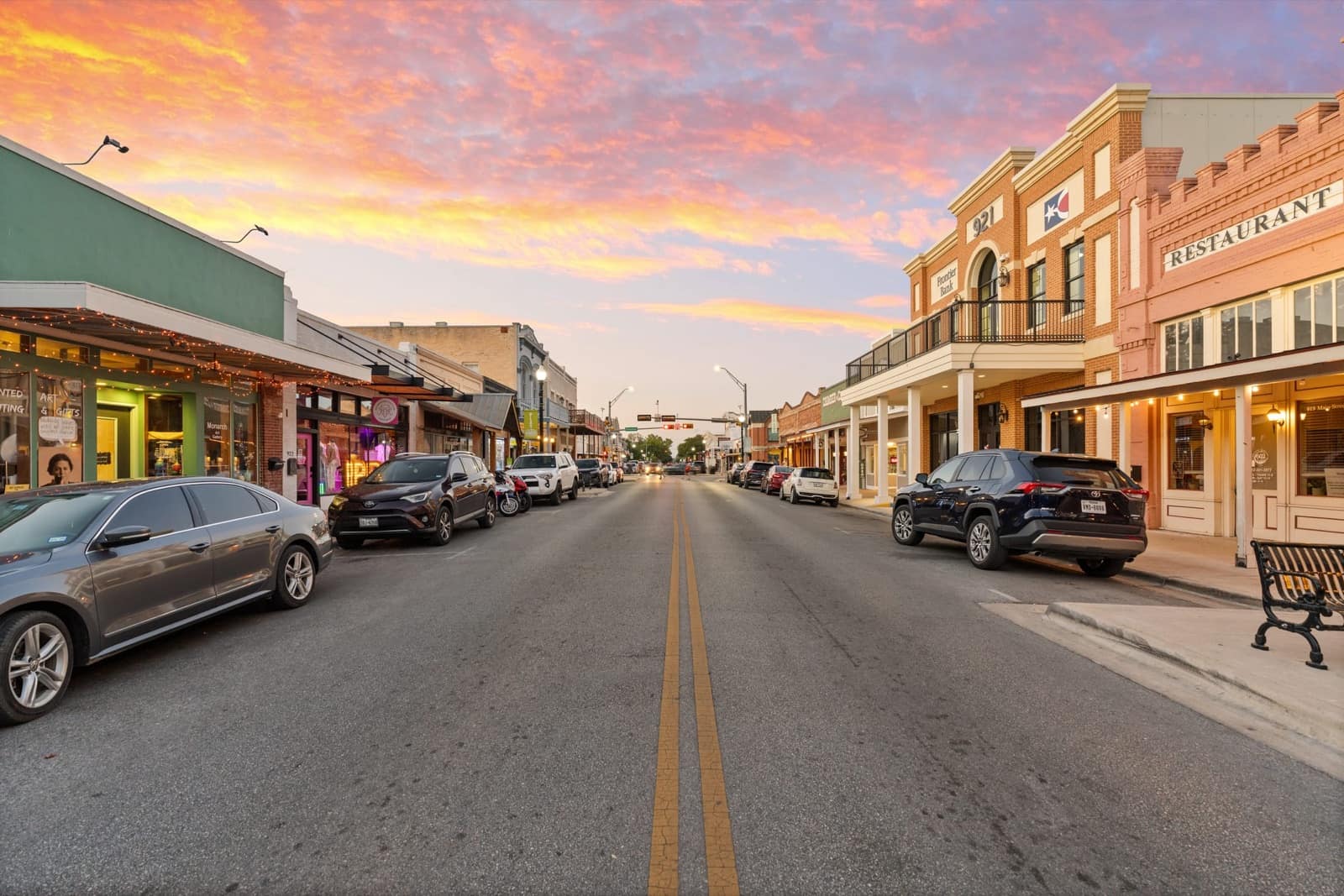
Taylor, TX Real Estate Overview
Taylor is a historic city in eastern Williamson County with a walkable downtown, a strong agricultural heritage, and a housing market that has drawn fresh attention as the region's growth pushes east. Buyers searching Taylor TX real estate encounter an unusually varied stock for a town its size: early-twentieth-century historic homes, mid-century houses, newer subdivision construction, and rural acreage just outside the city.
That range is part of Taylor's appeal. A buyer wanting character and a renovation project can find historic homes near downtown, while one wanting low-maintenance new construction can look at the subdivisions expanding around the city. Investors and land buyers, meanwhile, watch the surrounding acreage as growth moves outward.
Pricing and price per square foot move month to month and should be confirmed against current data rather than a town-wide average.
The Samsung Plant and the Growth Corridor
The biggest story shaping Taylor's market is the major Samsung semiconductor manufacturing project in the area, a large investment that has put eastern Williamson County on the map as a growth corridor. Large advanced-manufacturing projects tend to draw construction, supplier, and operations employment over time, which in turn supports regional housing demand.
For buyers and sellers, the practical implications are about momentum and timing rather than precise numbers:
- Job and population growth can support demand for housing across the east-county corridor.
- New retail, services, and infrastructure often follow major employers over time.
- Timelines, hiring, and investment figures for large projects shift, so treat specifics as items to confirm.
It is worth keeping expectations grounded. The corridor's long-term trajectory looks oriented toward growth, but the pace and exact effects on any single home's value are uncertain. The smart move is to focus on the fundamentals of the specific property — location, condition, lot, schools, and taxes — rather than betting on a headline. For current details on the project's scale and timeline, rely on primary sources and verify before deciding.
Historic Homes and Downtown Taylor
One of Taylor's distinguishing features is its stock of historic homes and its historic downtown district. Buyers drawn to older homes find architecture and character that newer subdivisions cannot replicate, often on established lots near the center of town.
If you are considering a historic home, plan for the realities of older construction: budget for inspections that cover foundation, electrical, plumbing, and roof; understand any historic-district guidelines that may affect exterior changes; and weigh renovation costs against move-in-ready alternatives. These homes can be rewarding, but they reward buyers who go in with eyes open.
Land and Acreage Near Taylor
Beyond the city limits, eastern Williamson County still has working land and acreage homesites, a draw for buyers who want space, a rural setting, or room to build. With the area's growth, land near Taylor has become a point of interest for both homeowners and investors.
Acreage buying carries its own checklist: confirm water (well or utility), wastewater (septic or sewer), road access and easements, floodplain status, deed restrictions, and what utilities reach the property. Agricultural valuation and future development potential are also worth understanding. Always verify these details with the county and qualified professionals before relying on them.
Taylor ISD and Schools
Most of Taylor is served by Taylor ISD. As eastern Williamson County grows, districts in the corridor are managing rising enrollment, and boundaries or campuses can change. Some outlying addresses may fall in neighboring districts.
Always verify the exact zoned schools for a specific address with the district, and check current ratings through the Texas Education Agency at txschools.gov. School zoning, ratings, and program offerings should be confirmed before you rely on them.
Commute from Taylor
Taylor sits in eastern Williamson County, east of Round Rock and Hutto. Daily commuting depends heavily on where you work: trips to the Samsung corridor, Round Rock, or Hutto are relatively local, while north Austin employment centers are a longer drive via the area's highways and tollways.
As anywhere in the metro, test your specific route at the hours you would actually drive, in both directions, before buying. Actual commute times vary by destination and time of day.
What Buyers and Sellers Should Know
For buyers: Taylor's variety is its strength — match the home type to your goals, whether that is a historic renovation, new construction, or acreage. Verify schools by address, total the true cost of ownership including any MUD or PID, and ground your decision in property fundamentals rather than growth headlines.
For sellers: Regional attention from the growth corridor can help interest, but pricing should still reflect the specific home's condition, location, and current comparable sales — not optimism about the area's future. A well-prepared, accurately priced home tends to perform best regardless of the macro story.
Property Taxes in Taylor
Texas has no state income tax, so local property taxes fund schools, county, city, and any special districts. Your total rate is the sum of overlapping entities — county, city, school district, and any MUD or ESD — and newer subdivisions may carry a MUD or PID that raises the effective cost in early years.
Specific Taylor tax rates, assessments, and exemption details change and should be confirmed with the Williamson Central Appraisal District at wcad.org and the county tax office at wilcotx.gov, or with a tax professional. Homestead, over-65, disabled, and disabled-veteran exemptions are available with no fee to file.
Taylor at a Glance
| Factor | What to expect in Taylor |
|---|---|
| Location | Eastern Williamson County, east of Round Rock and Hutto |
| Growth driver | Nearby Samsung semiconductor corridor |
| Housing stock | Historic homes, mid-century, newer subdivisions, acreage |
| Character | Historic downtown, agricultural heritage |
| Pricing | Varies by home type; confirm current data |
| Schools | Primarily Taylor ISD; verify by address |
| Commute | Local to the corridor; longer to north Austin |
| Taxes | County + city + school + any MUD/PID; verify rates |
| Best for | Buyers wanting variety, character, land, or corridor access |