
At a glance: Georgetown vs. Liberty Hill
| Factor | Georgetown | Liberty Hill |
|---|---|---|
| Setting | County seat; established city with a historic downtown Square | Smaller, more rural Hill Country town |
| Location | On I-35, ~26–30 mi N of Austin | ~12 mi W of Georgetown on Hwy 29; ~35–40 mi NW of Austin |
| Housing stock | Wide range: 55+ resort, riverfront MPCs, established neighborhoods, downtown | Newer subdivisions, production builders, growing fast |
| New construction | Plentiful in large MPCs (e.g., Wolf Ranch) plus infill | A defining feature — many new communities like Santa Rita Ranch |
| Acreage / land | Limited within the city; more on the outskirts | More abundant; acreage homesites and ranch-style lots common |
| Commute | Direct I-35 access toward north Austin | Hwy 29 east to Georgetown/I-35, then south — longer overall |
| School districts | Can be GISD, Leander ISD, or Liberty Hill ISD by address | Primarily Liberty Hill ISD |
| Taxes / special districts | County + city + school + any MUD/PID | Often newer MUD/PID communities; verify per address |
| Tends to suit | Buyers wanting amenities, variety, interstate commute | Buyers wanting space, newer homes, a quieter, rural feel |
Treat every "verify" cell as a starting point, not a conclusion — confirm by exact address.
Georgetown: established, varied, on the interstate
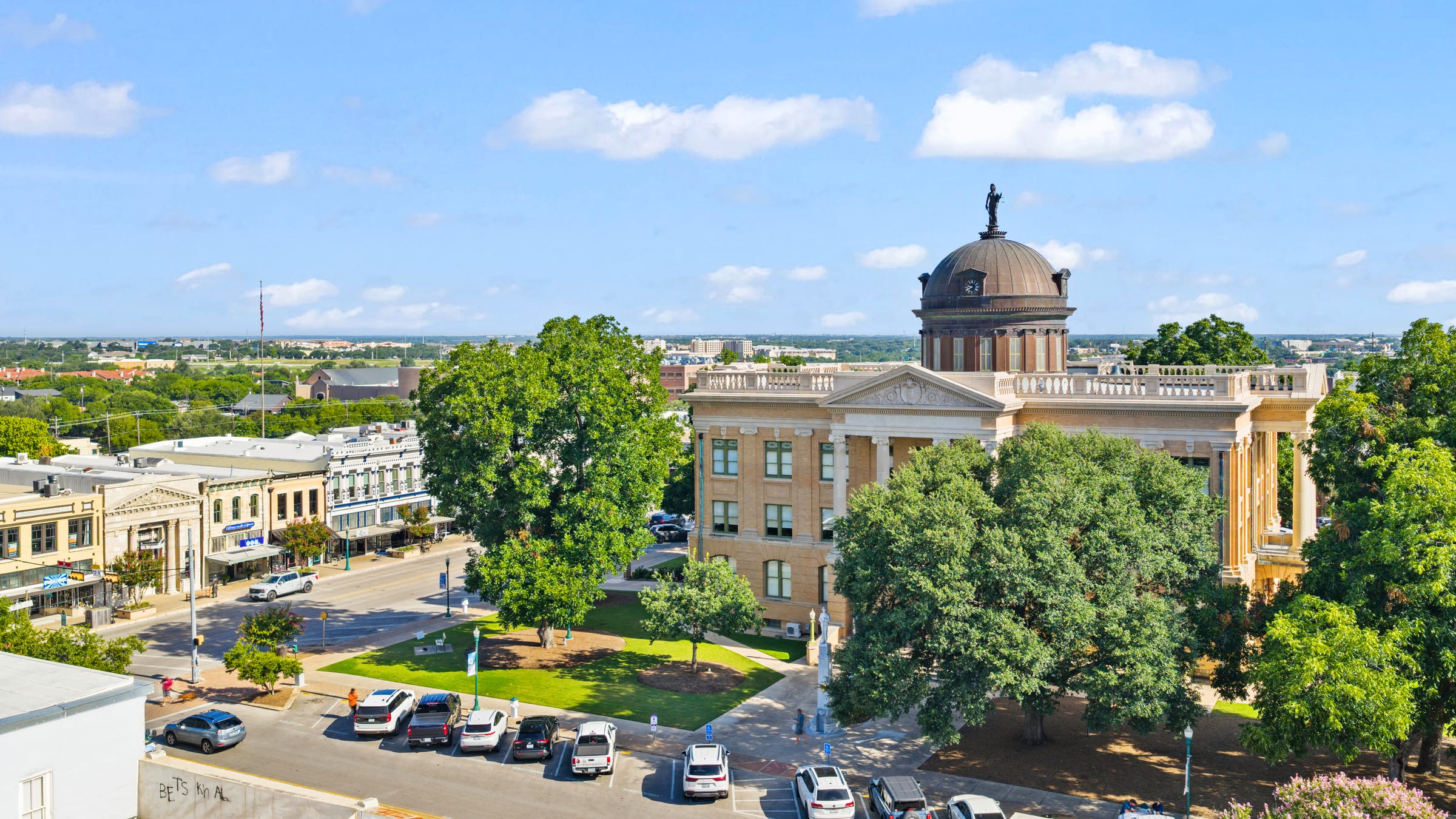
Georgetown is the county seat of Williamson County and sits directly on I-35, roughly 26 to 30 miles north of downtown Austin. It has repeatedly been named among the fastest-growing cities in the nation, yet it still anchors itself around a walkable, historic core — the Williamson County Courthouse district, often called the "Most Beautiful Town Square in Texas," with 180-plus historic buildings and a steady calendar of events like the spring Red Poppy Festival. The city is also home to Southwestern University, the oldest university in Texas.
What sets Georgetown apart in this comparison is the range of housing. You can find resort-style 55+ living in Sun City, Del Webb's large active-adult community with multiple golf courses; riverfront master-planned living in Wolf Ranch along Hwy 29 and the San Gabriel River; established golf and country-club neighborhoods like Berry Creek and Cimarron Hills; and walkable historic homes near downtown. That breadth means Georgetown can fit a first-time buyer, a move-up family, and a downsizing retiree — often within the same city. For the full picture, see the Georgetown, TX real estate overview.
Georgetown's location is its other defining strength. Being on I-35 gives more direct access toward north Austin employment centers than towns set farther off the interstate. Day-to-day errands are easier too, with the H-E-B-anchored Wolf Ranch Town Center, the Square, and a broad retail base. Treat current median prices, days on market, and tax rates as estimates to verify — the local market shifted toward more balanced conditions through 2025, and figures move.
Liberty Hill: newer, more rural, more land
Liberty Hill sits about 12 miles west of Georgetown along Hwy 29 and roughly 35 to 40 miles northwest of downtown Austin. It is one of the metro's fastest-growing communities by percentage — a small town that has multiplied in size since 2020 — but it keeps a distinctly rural, Hill Country character. Downtown features an outdoor sculpture garden, and the city site reflects a community still actively building out its core.
The defining real-estate feature here is space and newness. Liberty Hill offers more land and acreage homesites than Georgetown's city core, alongside a wave of newer subdivisions and production-builder communities such as the award-winning Santa Rita Ranch, plus Stonewall Ranch, Orchard Ridge, Larkspur, and acreage-oriented areas like Clearwater Ranch and Northgate Ranch. Buyers who want a larger lot, a brand-new home, or a quieter setting often gravitate here. For land-specific options, see Liberty Hill acreage homes and land, and for the broader market, the Liberty Hill, TX real estate page.
On pricing, Liberty Hill has generally offered a more attainable entry point than some neighboring areas, though figures vary by community and month and should be treated as an estimate to verify. Most homes here fall in Liberty Hill ISD, which is widely known in the area, but district and campus assignments must still be confirmed by address — and any rating you read is point-in-time information to verify. The trade-off for the space and newer construction is commute: from Liberty Hill you typically drive Hwy 29 east toward Georgetown and I-35 before heading south, which adds time compared with a Georgetown address on the interstate.
The real trade-offs
Strip away the marketing and the choice comes down to a handful of honest tensions:
- Amenities and variety vs. space and quiet. Georgetown gives you more housing types, retail, and a downtown core. Liberty Hill gives you more land, newer homes, and a calmer pace.
- Commute. Georgetown's I-35 access is generally more direct toward Austin. Liberty Hill's Hwy 29 route adds distance — verify times for your specific route and hours, since traffic varies.
- New construction. Both have it, but it's a primary feature in Liberty Hill, while Georgetown blends new MPCs with established and historic neighborhoods.
- Schools. Liberty Hill is largely one district; a Georgetown address can land in GISD, Leander ISD, or Liberty Hill ISD. Either way, confirm by address — see Georgetown school zones and how to verify them.
- Taxes and special districts. Newer communities in either town may carry a MUD or PID on top of county, city, and school taxes. Total HOA + MUD/PID + property tax for a true cost of ownership, and treat every figure as an estimate to verify. See Georgetown property taxes for how the layers stack up.
A fair way to decide
There is no universally "better" town here — only the better fit for your property type and lifestyle. Use this framework:
- Start with commute. Map your real weekday drive from a few candidate addresses in each town. If a direct I-35 route matters most, that favors Georgetown; if it's a secondary concern, Liberty Hill opens up.
- Define your lot and home type. Want acreage, a larger lot, or a brand-new build? Liberty Hill is built around that. Want a specific housing type — 55+ resort, riverfront MPC, downtown historic, established golf community? Georgetown's range is wider.
- Verify schools by address. Don't assume a city name equals a district. Confirm the district and campuses for each address with the district directly.
- Total the true cost. Add property tax, any MUD or PID, and HOA dues together for each home — newer communities can carry more layers. Verify rates with the county, the district, and a tax professional.
- Match to your stage of life. Both towns suit many buyers; the right call depends on whether you prioritize amenities and variety (often Georgetown) or space and newness (often Liberty Hill).
Run both towns through the same five questions and the answer usually becomes clear — without anyone having to declare a winner.
What buyers miss
The most common mistake is treating these towns as interchangeable because they're close and both in Williamson County. They aren't. The everyday experience of a Georgetown address on the interstate is different from a Liberty Hill acreage lot off Hwy 29 — in commute, in lot size, in housing style, and in how built-out the surroundings already are.
The second mistake is comparing list prices without comparing total carrying costs. A lower sticker price can come with a higher MUD rate or PID assessment, and a higher price can include amenities or a more direct commute. Total the costs, verify the figures, and compare like for like.