
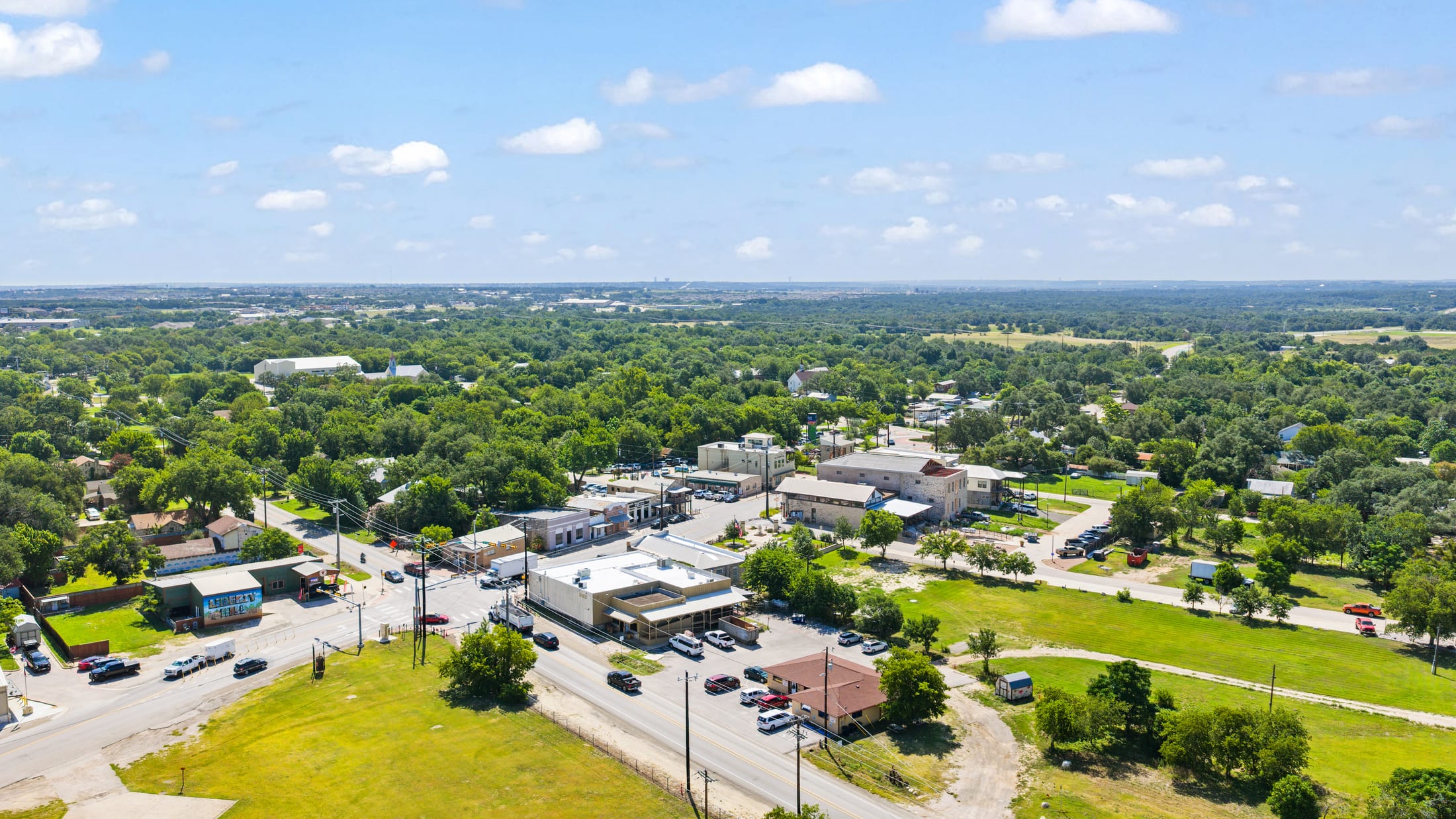
Acreage and land
Acreage Homes and Land in Liberty Hill, TX
Acreage homes and land in Liberty Hill, TX appeal to buyers who want Hill Country space.
Current property search
Liberty Hill Land and Acreage.
Current Liberty Hill listings matched to this page, with filters ready for further refinement.
Loading current listings
Page 1

Listings courtesy of Unlock MLS as distributed by MLS GRID.
Participant brokerage: All City Real Estate Ltd. Co.
Some IDX listings have been excluded from this website.
All data is obtained from various sources and may not have been verified by broker or MLS GRID. Supplied Open House Information is subject to change without notice. All information should be independently reviewed and verified for accuracy. Properties may or may not be listed by the office/agent presenting the information.
The information provided is exclusively for consumers' personal, noncommercial use and may not be used for any purpose other than to identify prospective properties consumers may be interested in purchasing. Data is deemed reliable but is not guaranteed by MLS GRID.
Use of MLS GRID data may be subject to an end user license agreement prescribed by the applicable MLS, if any, as amended from time to time.
Any use or search of data on this website, other than by a consumer looking to purchase real estate, is prohibited. Report accuracy concerns to michaelrmoody@gmail.com or 512-496-0317.
Why buyers look at acreage in Liberty Hill
Liberty Hill sits in the Texas Hill Country about 12 miles west of Georgetown on Hwy 29, and its more rural character is a big part of the draw. Alongside master-planned neighborhoods, the area offers larger homesites and acreage communities such as Clearwater Ranch and Northgate Ranch, plus unrestricted tracts where buyers can keep horses, build a custom home, or simply spread out.
The town's median home price was roughly $356K in 2025, but acreage pricing works differently — it depends on parcel size, location, water, utilities, restrictions, and improvements, so treat any per-acre or per-property figure as an estimate to verify. Schooling through Liberty Hill ISD (TEA "A" rated) is a common motivation; verify the campus for any specific address. For the broader market, see Michael's Liberty Hill, TX real estate overview, and for nearby options compare the best areas near Georgetown for acreage.
Water: wells and what to test
Out on acreage, you may not have city water. Many properties rely on a private well, and some have water hauled or rainwater systems.
If a property has an existing well, confirm:
- Output / flow rate — gallons per minute, and whether it's adequate for a household plus any livestock or irrigation.
- Water quality — test for bacteria, nitrates, and minerals; treatment may be needed.
- Depth and equipment age — pump, pressure tank, and casing condition.
If there is no well, ask what it would cost to drill one (no guaranteed output until drilled), or whether a water utility or co-op line is available. Existing well output and quality must be verified per property . The Texas Water Development Board (twdb.texas.gov) is a useful starting reference for groundwater information.
Septic systems (OSSF)
Rural homes typically use an On-Site Sewage Facility (OSSF) — a septic system — rather than city sewer. These are permitted and regulated, and they need inspection and maintenance.
When buying acreage with an existing system, confirm the type (conventional vs. aerobic), its condition, permit records, and maintenance history. Aerobic systems require ongoing service contracts. If you plan to build, the land must pass soil suitability for the system you intend to install, which affects both cost and where the home can sit. Williamson County administers OSSF permitting; verify requirements with the county and a licensed installer before assuming a tract will support the home you want.
Utilities and the electric co-op
Acreage outside city limits is often served by an electric cooperative rather than a city utility, and service territory and connection costs vary. For a vacant tract, getting power to a future building site can mean a meaningful run of line and an upfront cost — confirm with the serving co-op for the specific address . Also check availability of internet, propane (rural homes commonly use propane rather than natural gas), and trash service. None of these can be assumed the way they can in a subdivision.
Floodplain (FEMA) and drainage
Hill Country terrain and creeks mean floodplain matters. Check whether any part of the parcel — especially a planned building site — falls within a FEMA Special Flood Hazard Area using the FEMA Flood Map Service Center. Floodplain status can affect where you can build, insurance requirements, and lending. Whether a specific parcel is in a floodplain must be verified . Beyond the FEMA maps, walk the land and ask how it drains in heavy rain; low crossings and creeks can isolate a homesite during storms.
Road and easement access
A beautiful tract is far less valuable if you can't legally reach it. Confirm legal access, not just a dirt path that has always been used:
- Does the parcel front a public road, or does access depend on a recorded easement across someone else's land?
- Is the access easement deeded and in writing?
- Who maintains the road, and is there a shared maintenance agreement?
- Are utility easements in place to bring power and water to the building site?
A title company and survey help confirm access. Never assume access from how a property "has always been used" — get it documented.
Deed restrictions and what you can build
Acreage ranges from fully unrestricted to subject to detailed deed restrictions. Restrictions may govern minimum home size, manufactured homes, livestock, businesses, hunting, subdividing, and short-term rentals. Some acreage communities like Clearwater Ranch and Northgate Ranch have an HOA and CCRs; truly unrestricted tracts have none. Get the recorded restrictions in writing and read them against your plans before you buy, because they directly limit what you can do with the land.
Ag and wildlife valuation — and rollback risk
Many Texas acreage parcels carry a special-use tax valuation:
- Agricultural (1-d-1 "ag") valuation taxes the land on its productive value rather than market value, lowering the tax bill, when it's used for qualifying ag activity.
- Wildlife management valuation can maintain a similar benefit when the land is managed for wildlife under an approved plan.
The catch is rollback tax: if you change the use to non-agricultural — for example, building a homestead on land that had been in ag — the taxing authorities can recapture several years of the tax difference plus interest. Whether a parcel currently has ag or wildlife valuation, and your potential rollback exposure, must be verified with the Williamson Central Appraisal District and a tax professional. This can be a large, surprising number, so it belongs in your underwriting from day one.
Financing land and acreage
Financing raw land or acreage is not the same as a standard home mortgage. Vacant land and unimproved tracts often require larger down payments, shorter terms, and higher rates, frequently through a land lender or local bank rather than a conventional mortgage. A parcel with an existing, conforming home may qualify for more standard financing, while a build may involve a construction or construction-to-permanent loan. Talk to a lender experienced with rural and land lending early, because it shapes what you can offer and how you structure the purchase.
Surveys and inspections
Two pieces of diligence are especially important on acreage:
- Survey — a current survey (often a boundary or staked survey) confirms acreage, boundaries, easements, and encroachments. Acreage from a listing or appraisal district is not a substitute.
- Inspections — inspect the home if there is one, and separately evaluate the well, septic/OSSF, and any structures or outbuildings. A standard home inspection won't fully cover rural systems.
Title work should surface easements, mineral reservations, and restrictions; review the title commitment carefully. Michael can help you assemble the right surveyor, inspectors, and rural lender.
Due-diligence checklist for Liberty Hill acreage
- Water — well output, quality, equipment age, or cost/feasibility to drill
- Septic/OSSF — type, condition, permits, maintenance, or soil suitability to build
- Electric co-op — service territory and connection cost to the building site
- Other utilities — internet, propane, trash service availability
- Floodplain — FEMA status for the parcel and building site
- Drainage — how the land sheds water; creek crossings and access in storms
- Access — recorded legal access or deeded easement; road maintenance
- Deed restrictions / CCRs — what you can build, keep, and operate
- Ag / wildlife valuation — current status and rollback exposure
- Financing — land or construction loan terms lined up early
- Survey — current boundary survey, not just listing acreage
- Inspections & title — home, well, septic, outbuildings; easements and minerals reviewed
Verify tax, valuation, floodplain, and legal details with the county, appraisal district, your lender, a title company, a licensed surveyor or installer, or a tax professional before you commit.
Your local agent
Georgetown-rooted. Williamson County focused.
Michael Moody is a Broker Associate with All City Real Estate, helping clients compare Georgetown first, then the nearby communities when the search or sale plan expands.

Primary market
Georgetown, TX

Brokerage
All City Real Estate

Phone

FAQ
Direct Answers.
A quick pass through the questions that tend to matter before a search, sale, or area decision.
Often not. Many acreage properties rely on a private well and an on-site septic system (OSSF) rather than municipal water and sewer. Some have hauled water or rainwater collection. Confirm the water source, well output and quality, and the septic type and condition for each property, and verify what utilities are actually available at the building site .
Agricultural (1-d-1) valuation taxes qualifying land on its productive value instead of market value, lowering the tax bill. Wildlife valuation can do something similar. If you change the use — like building a homestead on ag land — the county can recapture several years of tax savings plus interest as a rollback. Confirm current status and exposure with the appraisal district and a tax professional .
Start with the FEMA Flood Map Service Center for the parcel, paying attention to where you'd actually build. Floodplain status affects building, insurance, and lending. Whether a specific tract is in a Special Flood Hazard Area must be confirmed , and you should also walk the land to understand drainage, creeks, and low crossings.
Usually not. Vacant or unimproved land often requires a larger down payment, shorter term, and higher rate, frequently through a land lender or local bank rather than a conventional mortgage. A tract with an existing conforming home may qualify for more standard financing, and building may involve a construction loan. Talk to a rural/land lender early so you know your terms before making an offer.
Acreage figures from a listing or the appraisal district aren't a substitute for a current survey. A boundary survey confirms exact acreage, property lines, easements, and any encroachments, and it pairs with title work that reveals access easements, mineral reservations, and restrictions. On rural land, these details meaningfully affect value and what you can do, so a current survey is well worth it.
It varies. Some acreage communities like Clearwater Ranch and Northgate Ranch have an HOA and recorded restrictions, while truly unrestricted tracts have none. Restrictions can govern home size, manufactured homes, livestock, businesses, subdividing, and rentals. Always obtain and read the recorded restrictions against your plans before buying, since they directly limit how you can use the land.
Talk with Michael
Talk Through the Next Move.
Share the search, sale, property, timeline, or city comparison on your mind. Michael can help turn it into a clearer next step.