
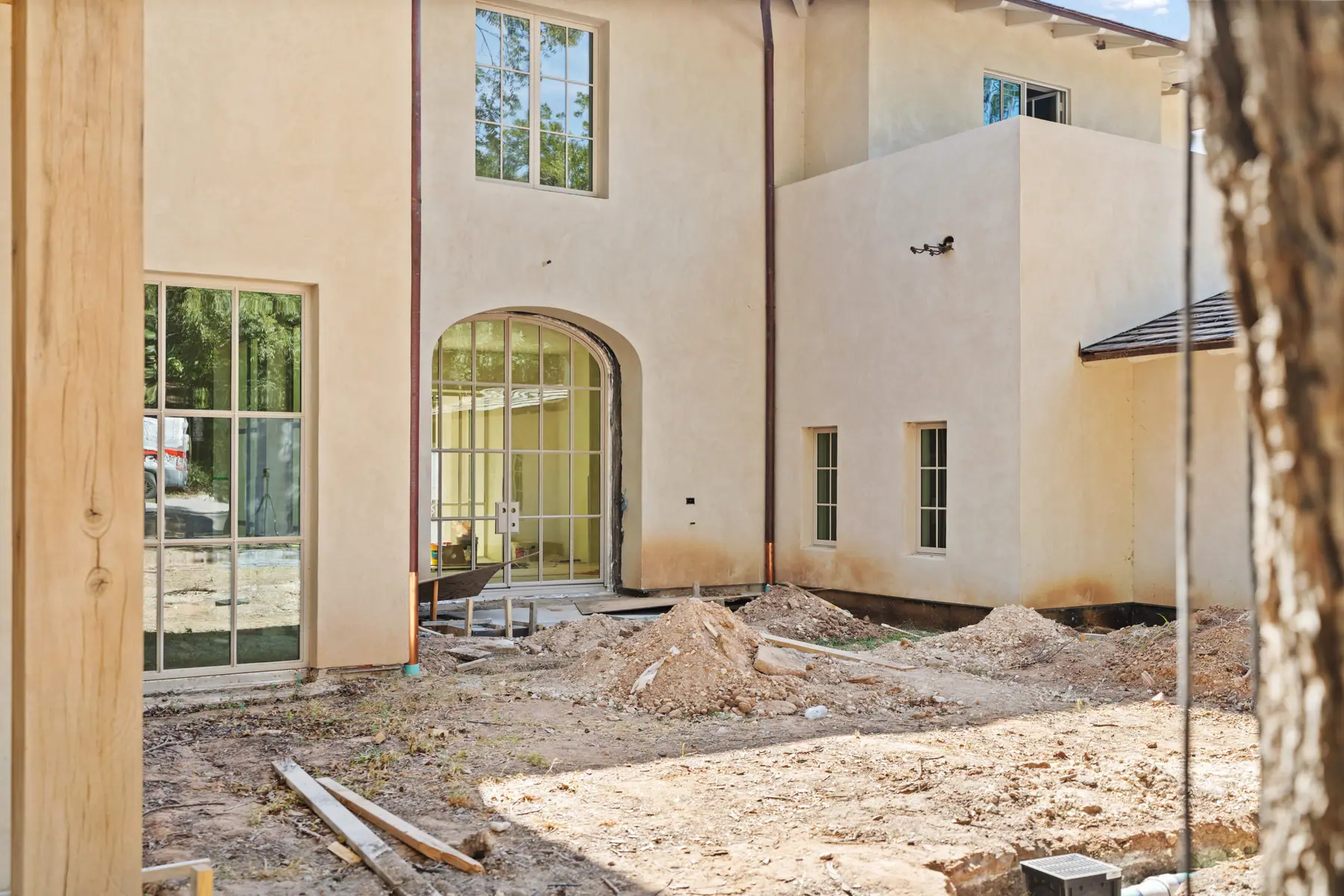
Liberty Hill new construction
New Construction Homes in Liberty Hill, TX
New construction homes in Liberty Hill, TX run from production builders in master-planned communities like Santa Rita Ranch to semi-custom homes on larger.
Current property search
New Construction in Liberty Hill.
Current Liberty Hill listings matched to this page, with filters ready for further refinement.
Loading current listings
Page 1

Listings courtesy of Unlock MLS as distributed by MLS GRID.
Participant brokerage: All City Real Estate Ltd. Co.
Some IDX listings have been excluded from this website.
All data is obtained from various sources and may not have been verified by broker or MLS GRID. Supplied Open House Information is subject to change without notice. All information should be independently reviewed and verified for accuracy. Properties may or may not be listed by the office/agent presenting the information.
The information provided is exclusively for consumers' personal, noncommercial use and may not be used for any purpose other than to identify prospective properties consumers may be interested in purchasing. Data is deemed reliable but is not guaranteed by MLS GRID.
Use of MLS GRID data may be subject to an end user license agreement prescribed by the applicable MLS, if any, as amended from time to time.
Any use or search of data on this website, other than by a consumer looking to purchase real estate, is prohibited. Report accuracy concerns to michaelrmoody@gmail.com or 512-496-0317.
What new construction looks like in Liberty Hill
Liberty Hill sits about 12 miles west of Georgetown on Hwy 29, roughly 35–40 miles northwest of downtown Austin. The town has grown quickly — from around 3,680 residents in the 2020 Census to an estimated 15,000+ by 2026 — and most of that growth is new housing. You will find a mix of production builders in master-planned communities and builders offering homes on larger acreage homesites.
Master-planned options include Santa Rita Ranch, an award-winning community with pools, parks, and trails, plus neighborhoods like Stonewall Ranch, Orchard Ridge, Larkspur, Butler Farms, and Bar W Ranch. The area's median home price was roughly $356K in 2025, broadly more attainable than nearby Leander, though new-construction price ranges shift by builder, section, and lot — treat any specific figure as an estimate to verify.
Schooling is a common draw: Liberty Hill ISD carries an "A" rating from TEA and is one of the fastest-growing districts in the metro. Verify the exact campus assignment for any address with the district, since boundaries shift as new schools open. For a fuller picture of the town, see Michael's Liberty Hill, TX real estate overview.
Builder incentives: read the fine print
Builders in Liberty Hill frequently advertise incentives — rate buydowns, closing-cost credits, design-center allowances, or price adjustments on standing inventory. These offers are real, but they are time-sensitive and change often, and they usually come with conditions.
A few things buyers miss:
- Many incentives require using the builder's preferred lender and title company. Compare that financing against an outside lender; the headline rate may not be the cheapest total cost.
- Closing-cost credits are often capped, and design upgrades can erase the savings quickly.
- "Standing inventory" or quick-move-in homes sometimes carry the deepest discounts because the builder wants them off the books before quarter's end.
Get every incentive in writing inside the contract or an addendum. A verbal promise from a sales rep is not enforceable. Michael can help you weigh a builder's incentive against an outside lender quote so you are comparing true numbers, not marketing.
Bring your own agent on the first visit
This is the single most important step, and it is easy to get wrong. Register your agent at your first visit to the model home or sales office. Most builders require your agent to accompany you or be named on that initial sign-in for representation to apply. If you tour alone first, the builder may decline to recognize an agent later.
The builder's on-site sales representative works for the builder, not for you. Having your own agent costs you nothing extra in a typical builder transaction and gives you someone reviewing the contract, the lot, the incentives, and the timeline on your side of the table.
Builder contracts are not the standard Texas contract
When you buy resale in Texas, you typically use the standard TREC promulgated contract, which is fairly balanced. New-construction builders use their own contracts, which tend to favor the builder.
Watch for these clauses:
- Earnest money and deposits may be larger and non-refundable past certain milestones.
- Completion dates are often estimates, not firm deadlines, with broad delay allowances.
- Arbitration and dispute clauses can limit your options if something goes wrong.
- Change-order and upgrade pricing can climb fast once you are in the design center.
Read every page before signing, and don't assume protections from a resale contract carry over. An agent and, where the stakes warrant it, a real estate attorney can help you understand what you are agreeing to.
Lot selection: it matters more than the model
Two buyers can pick the same floor plan and end up with very different homes because of the lot. When you compare lots, consider:
- Drainage and grading — where does water go in a heavy rain? Low or downhill lots can collect runoff.
- Orientation — sun exposure affects comfort and energy bills.
- Backing and adjacency — a lot backing to a future phase, a road, or a retention pond lives differently than one backing to greenspace.
- Lot premium — builders charge more for desirable lots; decide whether the premium holds value at resale.
Walk the actual lot, not just the model, and ask what is planned for any adjacent vacant land.
MUD and PID exposure: budget the real tax bill
Many Liberty Hill master-planned communities are financed through a MUD (Municipal Utility District) or carry a PID (Public Improvement District) assessment. Both add to your cost of ownership on top of county, city, and school taxes.
- A MUD levies an ad valorem tax set by the district board to repay bonds for water, sewer, drainage, and roads. Rates are often higher in a community's early years and can decline as bonds are paid down. Texas law requires a MUD notice before contract.
- A PID is a fixed special assessment (commonly over 20–30 years) for improvements; sellers must provide a PID notice to buyers, and it can sometimes be paid off early.
Total your projected HOA dues + MUD or PID + base property tax to see true monthly cost. Specific rates and remaining terms must be confirmed per community — treat them as an estimate to verify. Michael's guide to Liberty Hill MUD, PID, and property taxes walks through how these stack up, and you should verify current figures with Williamson County and a tax professional.
Yes, you still need an inspection
A new home is not automatically a flawless home. Builders work fast, subcontractors vary, and defects happen. Consider an independent inspection at two stages:
- Pre-drywall / framing, while wiring, plumbing, and structure are still visible.
- Final walkthrough, before closing, to create a punch list the builder addresses.
Some buyers also schedule an 11-month warranty inspection near the end of the first-year builder warranty so any covered items get fixed before coverage lapses. The cost of an inspection is small next to the price of the home.
Timeline: what to expect
Build timelines vary widely by builder, plan, phase, and weather, so any quoted timeline is an estimate to verify. Quick-move-in inventory homes can close in weeks; a to-be-built home from contract through completion commonly takes several months to a year or more. Ask the builder for the timeline in writing, understand the delay provisions, and plan your lease, financing rate lock, and moving logistics around realistic dates rather than the optimistic ones.
Resale: think one move ahead
Buying new doesn't mean ignoring resale. Lots in earlier phases, well-chosen floor plans, and homes that aren't over-improved relative to the neighborhood tend to hold value better. Be cautious about paying large premiums for upgrades that the next buyer may not value. Because Liberty Hill keeps adding new inventory, your future buyer may be comparing your resale home to brand-new builder product — pricing and presentation will matter. For a market-level comparison, see Georgetown vs. Liberty Hill or browse new construction in Georgetown.
What to verify before you sign — checklist
- Incentives in writing — every credit, buydown, and allowance written into the contract or addendum
- Agent registered at your first visit so representation applies
- Financing compared — builder lender vs. an outside lender, total cost not just rate
- Contract reviewed — earnest money, completion terms, arbitration, change orders
- Lot walked — drainage, orientation, adjacency, lot premium
- MUD/PID confirmed — rate and remaining term per the required notices
- HOA dues + taxes totaled for true monthly cost
- School assignment verified by address with Liberty Hill ISD
- Inspections scheduled — pre-drywall, final walkthrough, and an 11-month option
- Timeline and warranty understood in writing
Verify tax, school-zone, and legal details with the county, the school district, your lender, a title company, or a tax professional before you commit.
Your local agent
Georgetown-rooted. Williamson County focused.
Michael Moody is a Broker Associate with All City Real Estate, helping clients compare Georgetown first, then the nearby communities when the search or sale plan expands.

Primary market
Georgetown, TX

Brokerage
All City Real Estate

Phone

FAQ
Direct Answers.
A quick pass through the questions that tend to matter before a search, sale, or area decision.
You are not required to, but it is strongly advised, and in a typical builder deal it costs you nothing extra. The on-site sales rep represents the builder. Your own agent reviews the contract, incentives, lot, and timeline on your behalf. The key is registering your agent at your first visit, since most builders require that for representation to apply.
They can be, but they are time-sensitive and conditional, so they need to be verified for your specific home and date . Many require the builder's preferred lender. Compare the total cost — rate, points, and fees — against an outside lender, and make sure every credit is written into your contract rather than promised verbally.
A MUD is a utility district that levies a property tax to repay bonds for infrastructure; a PID is a fixed assessment for improvements. Either can add meaningfully to your annual cost on top of county, city, and school taxes. Sellers must disclose them by law. Confirm current rates and terms per community and total them into your budget .
Yes. New homes still have defects from fast construction and varied subcontractors. Many buyers inspect at the pre-drywall stage and again at the final walkthrough, then schedule an 11-month inspection before the first-year warranty expires. The cost is small relative to the home and can catch issues the builder is obligated to fix.
It depends heavily on the builder, plan, phase, and weather, so treat any quote as something to confirm . Quick-move-in inventory homes can close in weeks. A to-be-built home commonly takes several months to a year or more from contract to completion. Always get the timeline and delay provisions in writing.
Liberty Hill has generally been more attainable on price than Leander, and it offers newer inventory and Liberty Hill ISD schools. Whether it beats Georgetown depends on price, taxes including any MUD or PID, commute, and lot. Compare them directly using Michael's Georgetown vs. Liberty Hill guide and verify current numbers before deciding.
Talk with Michael
Talk Through the Next Move.
Share the search, sale, property, timeline, or city comparison on your mind. Michael can help turn it into a clearer next step.