A relocation field guide to Williamson County and the Georgetown area — the property-tax math, the alphabet soup of MUDs and PIDs, the heat, the new-versus-resale question, and how to land softly in a market you’re learning from a distance.
You’ve made the decision. The job, the family, the cost of living, the no-state-income-tax math — something has pointed you toward Central Texas, and now you’re trying to buy a home in a place you may have only visited. That’s a harder task than buying in your own backyard, because the rules here are genuinely different from most of the country: the taxes are structured in an unfamiliar way, the newer subdivisions come with districts you’ve never heard of, the summers are no joke, and the market moves fast even when it’s “balanced.” This is the orientation guide for out-of-area buyers — the things locals know that you can’t see from a listing photo.
First, the Good News: No State Income Tax
Texas levies no state income tax, which is a meaningful piece of why so many people relocate here. But there’s a counterweight, and it surprises newcomers every time: because the state doesn’t tax income, local governments fund schools, roads, and services largely through property taxes — and those run higher than the national average.
A homeowner’s total rate is the sum of overlapping taxing entities: the county (Williamson County’s adopted rate was roughly 0.3694 per $100 in 2025), the city (Georgetown’s was about 0.3530 per $100 in 2025, and it varies by city), the school district (usually the single biggest slice), and any special districts. Effective bills commonly land around 1.5%–2.5% of a home’s value. The most important move you can make as a new owner is to file your homestead exemption — it’s free through the Williamson Central Appraisal District (WCAD), it lowers your taxable value, and it caps annual appraised-value increases at 10% for your primary residence. Buyers 65 and older gain additional exemptions and a school-tax ceiling.
The Alphabet Soup: MUD, PID, and HOA
Here’s the part that trips up nearly every relocating buyer. In Central Texas’s newer master-planned communities, the property-tax line is only the start. Watch for three more:
- MUD (Municipal Utility District): a district that financed the water, sewer, and roads in a developing area through bonds, repaid by an extra property tax on top of your county, city, and school taxes. MUD rates are usually highest in a community’s early years and can decline as the bonds are paid down. Texas law requires the seller to give you a MUD notice before contract — read it.
- PID (Public Improvement District): a district where owners pay a fixed special assessment (not a value-based tax) over roughly 20–30 years to fund roads, parks, and amenities. It ends when paid off and can often be paid early. Sellers must provide a PID notice too.
- HOA (Homeowners Association): most master-planned and newer communities carry mandatory dues funding pools, trails, and common areas, and enforcing deed restrictions. Dues range widely, from low hundreds to $1,000-plus a year, far higher in luxury or club communities.
The takeaway for an out-of-area buyer: two identically priced homes can have very different true costs of ownership once you add property tax, MUD, PID, and HOA. Always total all four. The Williamson County PID page is a useful starting reference.
The Heat Is Real (and So Is the Climate)
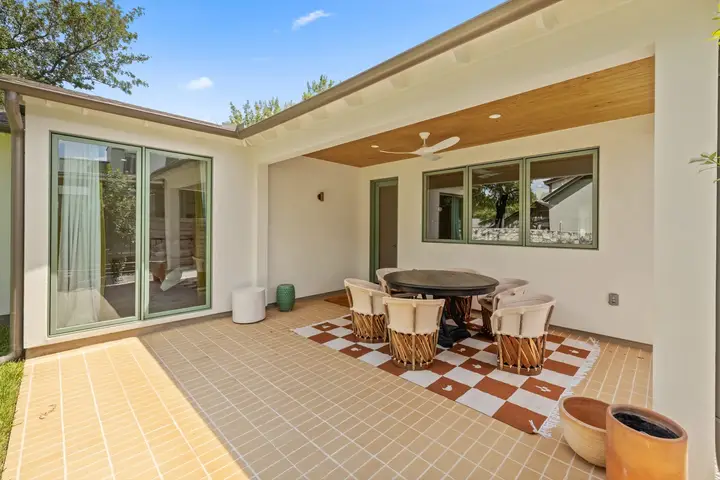
Nobody moves to Central Texas for the mild summers. Expect long stretches of triple-digit heat from roughly June through September, which shapes home-buying in practical ways: pay attention to a home’s orientation and shade, the age and efficiency of the HVAC system, attic insulation, and energy costs. Georgetown, notably, runs its city-owned utility on 100% renewable energy (wind and solar), one of the largest U.S. cities to do so. Newer construction tends to be more energy-efficient — a genuine consideration when the AC runs half the year.
Beyond the heat, factor in the rest of the climate. Central Texas sits in a region prone to drought cycles and, periodically, to heavy rain and flash flooding when storms roll through — which is part of why drainage infrastructure (often funded by those MUD districts) matters here. Foundations are typically slab-on-grade over expansive clay soils, so a home inspection focused on foundation movement and drainage is money well spent. And winters, while mild by most standards, do bring the occasional hard freeze; the February 2021 statewide event taught Texans to value good insulation and a reliable HVAC system. None of this should scare a buyer off — it’s simply the local knowledge that shapes a smart inspection checklist.
New Construction vs. Resale
This is one of the biggest forks for relocating buyers, and Central Texas offers an unusual abundance of both.
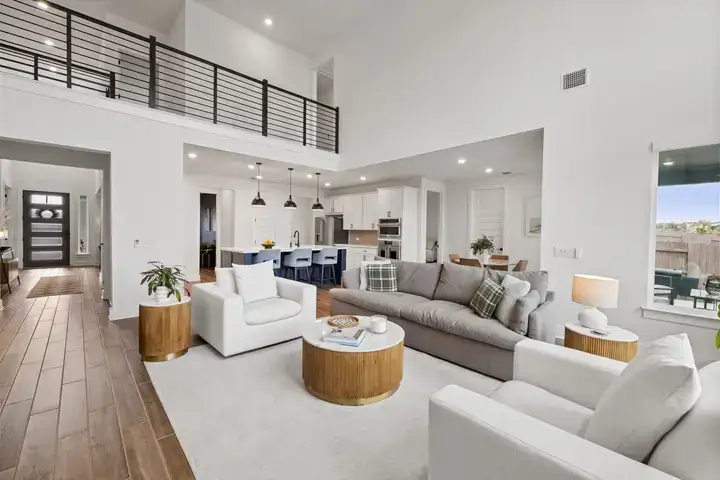
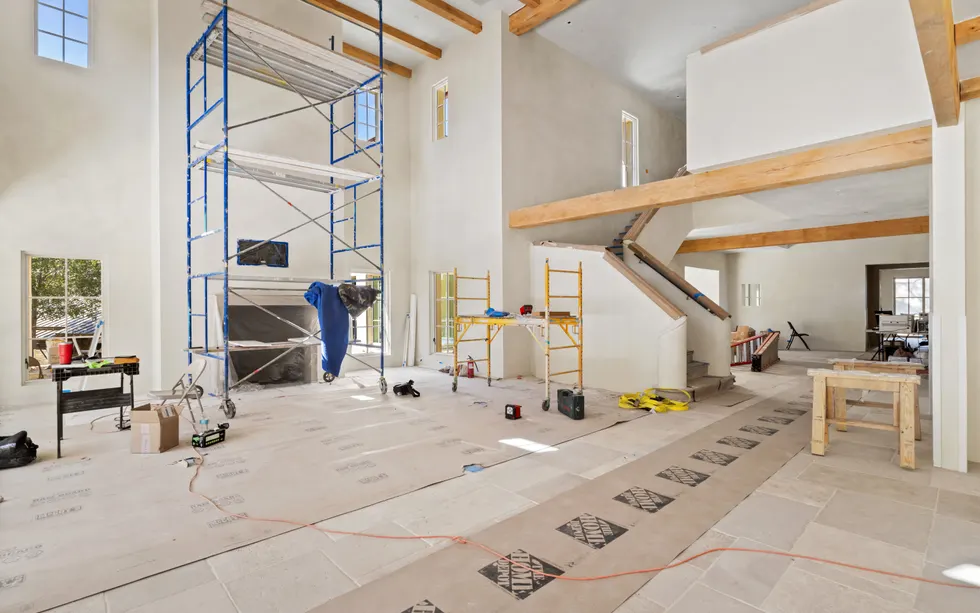
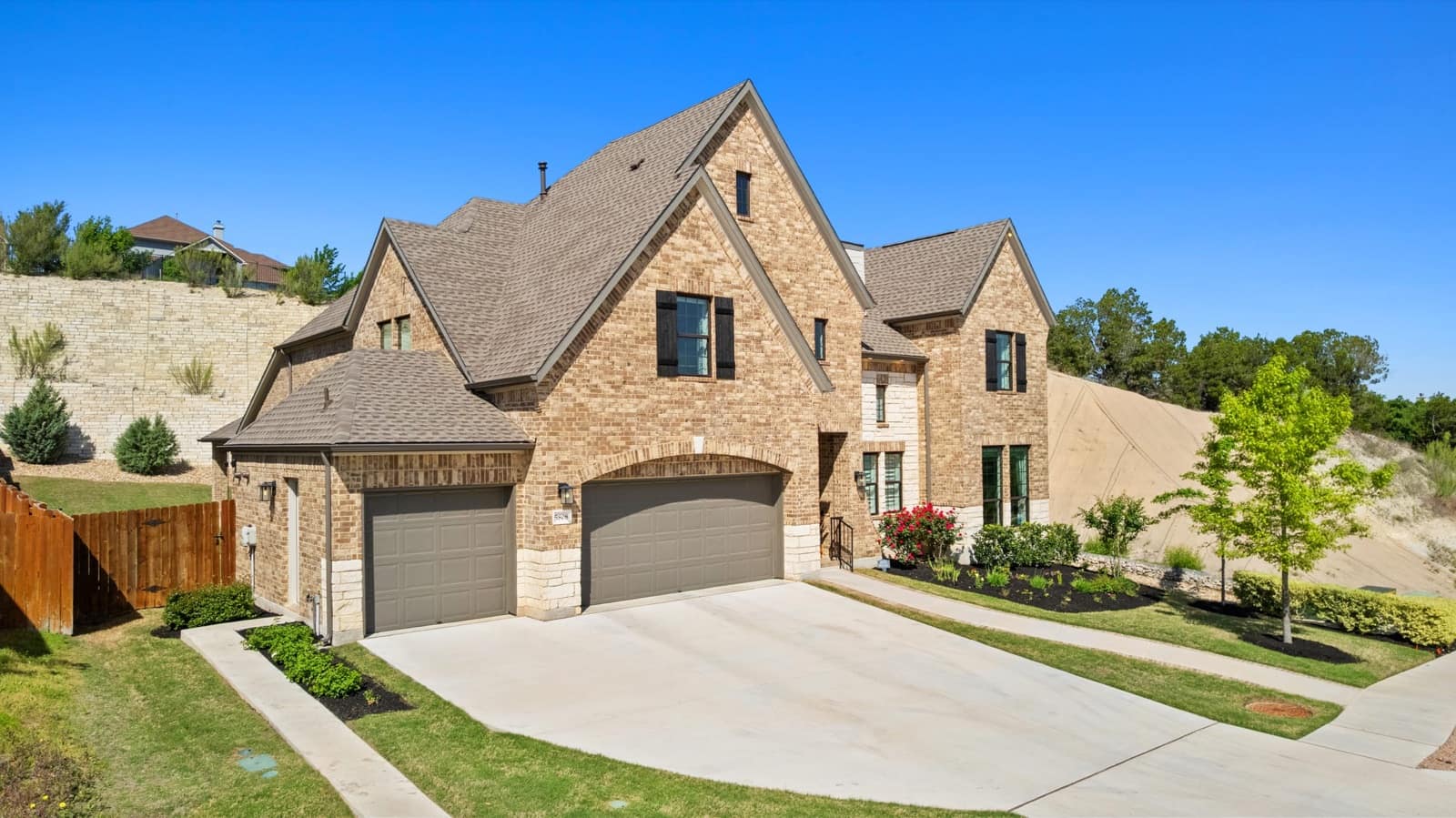
New construction dominates the fast-growing towns — Liberty Hill, Leander, Hutto, Jarrell, and the master-planned communities of Georgetown. The appeal: modern layouts, energy efficiency, warranties, and builder incentives that can be substantial in a balanced market. The catch: those homes are the most likely to carry MUD and PID districts, and amenities may still be under construction.
Resale homes — especially in established areas like central Georgetown, Round Rock, or mature Berry Creek and Cimarron Hills — often sit on larger, shadier lots in finished neighborhoods, sometimes outside the newer special districts. The trade-off is older systems and fewer modern floor plans. Neither is “better”; they suit different buyers. Just be sure to compare the all-in monthly cost, districts included.
Choosing a Town from a Distance
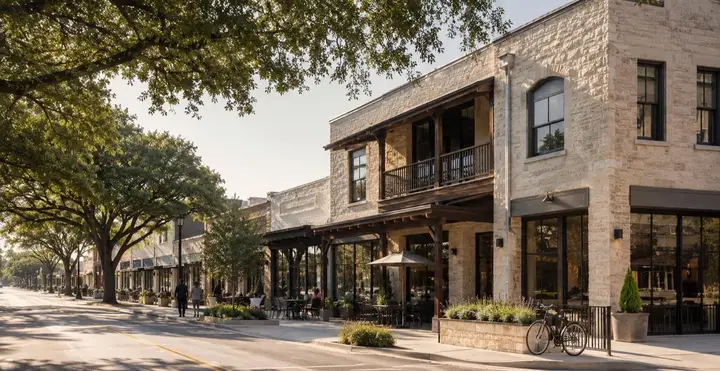
When you can’t drive every neighborhood, narrow by priorities. Want land and Hill Country scenery? Look west to Liberty Hill. Want rail access to Austin? Leander and the MetroRail Red Line. Want an established suburb near a major employer? Round Rock and Dell. Want history, a lake, and the most beautiful Square in Texas? Georgetown. Want the lowest price? Jarrell. And always — always — verify the school district by exact address at txschools.gov, because in this part of Texas, district lines don’t follow city limits.
Working with a Local Agent (and the Timeline)
If there’s one piece of advice for out-of-area buyers, it’s this: lean on local expertise. A Central Texas agent reads the disclosures you’ll skim, knows which communities carry heavy MUD rates, knows which school lines actually serve which streets, and knows how builder incentives are trending this month. The disclosures are public, but the interpretation is local knowledge.
On timeline: the metro market lengthened in 2025, with inventory rising and days on market stretching toward 90 in places like Georgetown — a shift toward a more balanced, buyer-friendlier environment than the frenzy of prior years. That gives relocating buyers a little more breathing room, but financing nuances still matter: get pre-approved early, budget for those higher property-tax escrow amounts in your monthly payment (they’re bigger than most newcomers expect), and factor builder rate buy-downs or incentives into your comparison when weighing new construction. Check current conditions on Redfin and Zillow before you set expectations.
A few financing nuances catch relocating buyers off guard. Because property taxes are high and folded into your monthly escrow, your payment can be hundreds of dollars more than a same-priced home would cost in a low-tax state — run the numbers with local tax rates, not your old ones. Newly built homes are sometimes appraised and taxed initially on the lot value before the house is complete, which means your first-year tax bill can jump substantially in year two once the finished home is on the rolls; ask your lender to escrow accordingly so you’re not surprised. And in a more balanced market, builders frequently offer rate buy-downs, closing-cost credits, or design-center incentives that an existing-home seller won’t — worth weighing when you compare new construction against resale.
The Bottom Line
Buying in Central Texas from out of area is entirely doable — thousands do it every year — but it rewards homework. Understand that no income tax comes paired with higher property taxes, learn the MUD/PID/HOA math so you compare homes on true cost, respect the heat in your inspection priorities, decide clearly between new and resale, and verify school lines by address. Then find a local agent who knows the corridors and the fine print. Get those pieces right, and the move north into Williamson County can be the smoothest big decision you make this year.
Market figures cited are approximate and current as of mid-2026; verify current data before making real estate decisions.