Homeowners associations are nearly unavoidable in Williamson County’s master-planned communities. Here’s what they actually do, what they cost, and how to decide whether one is right for you.
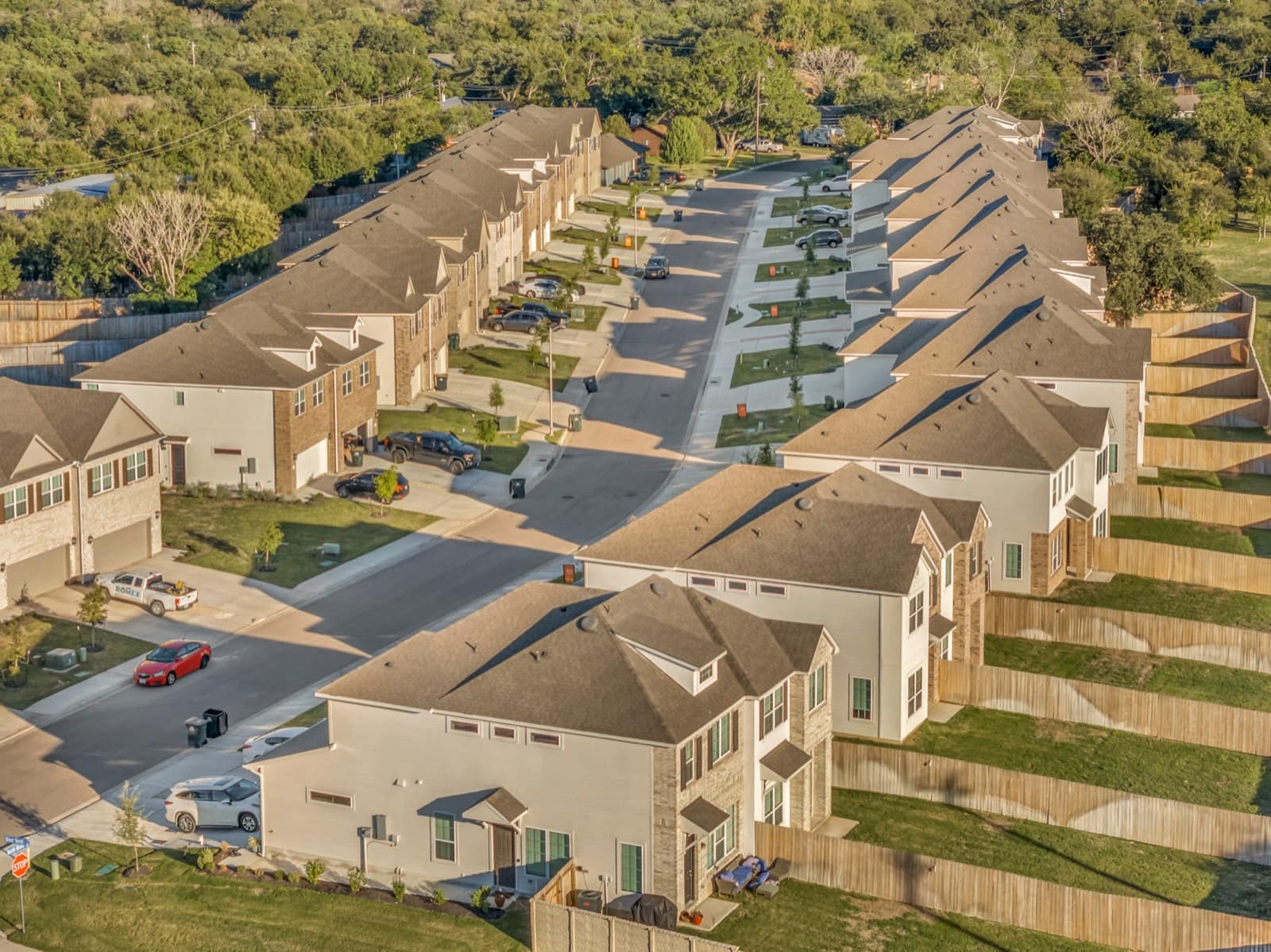
Ask a room full of Central Texas homeowners how they feel about their HOA and you’ll get the full emotional spectrum—from “it keeps the neighborhood beautiful and I’d never buy without one” to “they sent me a letter about my trash cans.” Both reactions are valid, and both miss the bigger point: in the fast-growing suburbs north of Austin, an HOA isn’t really optional. The overwhelming majority of newer subdivisions and master-planned communities in Georgetown, Leander, and Liberty Hill come with one. So the real question isn’t whether you can avoid an HOA—it’s whether a given HOA is one you can live with happily.
Let’s break down what these associations do, what they cost, and how to evaluate one before you buy.
What an HOA Actually Does
A homeowners association is a private organization that governs a residential community. When you buy in an HOA neighborhood, you automatically become a member and agree to pay dues and follow the community’s rules. In exchange, the HOA provides services that, in most Central Texas communities, fall into a few buckets:
- Amenities: Pools, splash pads, fitness centers, trails, parks, clubhouses, and event lawns—the kind of resort-style features that define communities like Santa Rita Ranch in Liberty Hill or Wolf Ranch in Georgetown.
- Common-area maintenance: Landscaping at entrances, upkeep of shared spaces, mowing of greenbelts, and maintenance of community signage and lighting.
- Rule enforcement: The HOA administers and enforces the community’s deed restrictions and covenants—the rules that keep one neighbor from painting their house neon or parking a boat on the front lawn.
That last function is where HOAs earn both their fans and their critics.
CCRs and Deed Restrictions
The rulebook of an HOA is its set of Covenants, Conditions & Restrictions (CCRs), often called deed restrictions. These are recorded against the property and run with the land, meaning they bind you and every future owner. CCRs can govern everything from exterior paint colors, fence styles, and roof materials to where you store your trash bins, whether you can run a short-term rental, and what kind of landscaping you must maintain.
For buyers who value consistency and protected property values, CCRs are a feature: they’re the reason the neighborhood still looks sharp ten years after the builder left. For buyers who prize total autonomy over their property, they’re a constraint worth taking seriously. Read the CCRs before you buy. They are the single best predictor of whether you’ll be happy in an HOA community.
What HOA Dues Cost
HOA dues in Central Texas vary widely. In many standard subdivisions, dues run from the low hundreds of dollars per year up to around $1,000 or more annually. Amenity-rich master-planned communities tend to sit at the higher end, and luxury or club communities—think gated golf neighborhoods like Cimarron Hills in Georgetown—can run considerably higher, sometimes with separate club memberships layered on top.
Dues are typically billed annually or quarterly and can rise over time. Some associations also levy special assessments—one-time charges to cover a major expense like a new pool pump or amenity-center roof—on top of regular dues. Ask about the HOA’s reserve fund and assessment history; a well-funded reserve means you’re less likely to get hit with a surprise bill.
The Crucial Distinction: HOA vs. MUD vs. PID
This trips up countless Central Texas buyers, so it’s worth stating plainly: HOA dues are not the same as MUD or PID taxes, and a single community can have all three.
- An HOA is a private association. Dues fund amenities, common-area upkeep, and rule enforcement.
- A MUD (Municipal Utility District) is a taxing entity that adds an ad-valorem property tax to fund water, sewer, and drainage infrastructure.
- A PID (Public Improvement District) is a special-assessment district where owners pay a fixed assessment, usually over 20 to 30 years, for public improvements.
When you calculate your true cost of ownership, you have to add HOA dues + any MUD tax or PID assessment + base property taxes together. A home with modest dues can still carry a hefty total monthly cost once a MUD is factored in. You can verify the tax-side obligations through the Williamson Central Appraisal District and the Williamson County PID page.
The Pros and Cons
The pros: Access to amenities you’d never afford on your own, well-maintained common areas, protected and consistent property values, a mechanism for resolving neighbor disputes, and curb appeal that holds up over time.
The cons: Mandatory recurring dues, rules that limit what you can do with your own property, the possibility of special assessments, and—occasionally—a board or management company that enforces the rules more zealously than you’d like.
Your Legal Protections: Texas Property Code Chapter 209
Texas homeowners aren’t at the mercy of unchecked HOA power. Most residential associations are governed by Texas Property Code Chapter 209, the Texas Residential Property Owners Protection Act. It establishes important homeowner rights, including notice and hearing procedures before certain enforcement actions, rules around fines and the collection of assessments, and access to association records. It’s worth a skim before you buy so you understand both your obligations and your rights.
The Resale Certificate: Your Best Pre-Purchase Tool
When you go under contract on an HOA home in Texas, you can obtain a resale certificate from the association. This document is your window into the HOA’s health and rules, disclosing current dues, any special assessments, the association’s financial standing, pending litigation, and the governing documents. Read it carefully. A resale certificate that reveals underfunded reserves, frequent special assessments, or restrictive rules is telling you something important before it becomes your problem.
How to Evaluate an HOA Before You Buy
- Read the CCRs and make sure you can live with the restrictions.
- Confirm the dues amount and billing schedule, and ask about the history of increases.
- Review the resale certificate for reserves, special assessments, and litigation.
- Separate the HOA cost from MUD/PID taxes and total your real monthly cost.
- Talk to current residents if you can—they’ll tell you how the HOA is actually run.
The Bottom Line
In Williamson County’s booming suburbs, an HOA usually comes with the territory, and for most buyers that’s a fair trade: amenities, maintained common areas, and protected property values in exchange for dues and a rulebook. The buyers who regret it are almost always the ones who skipped the CCRs and the resale certificate. Do that reading, separate HOA dues from any MUD or PID taxes, total your real cost of ownership, and you’ll know exactly what you’re signing up for—rules, pool, and all.
Market figures cited are approximate and current as of mid-2026; verify current data before making real estate decisions.