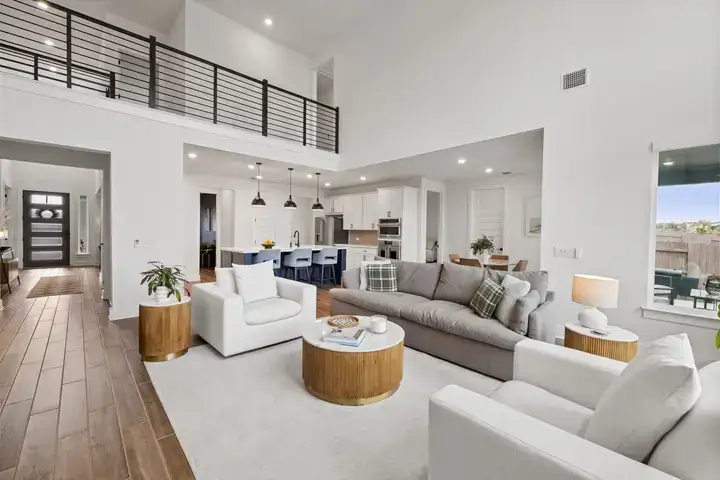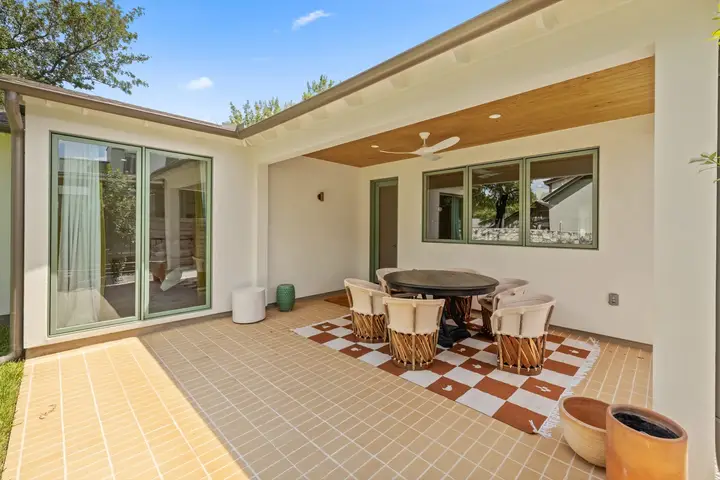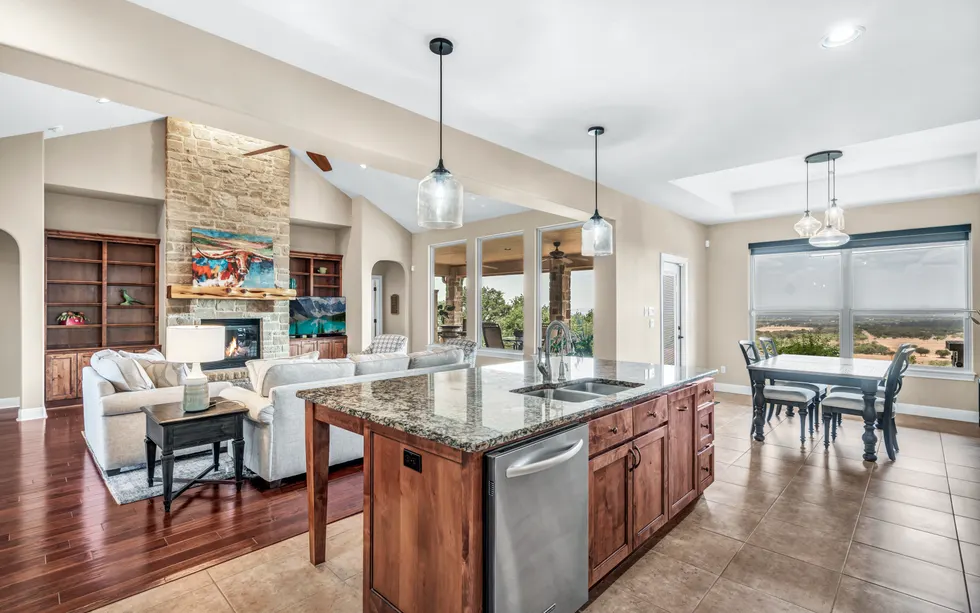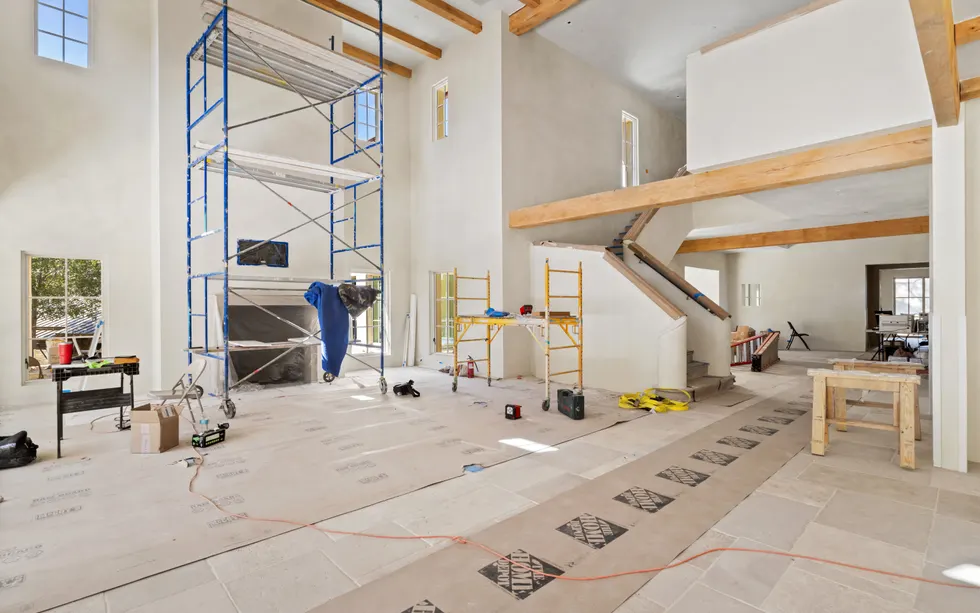
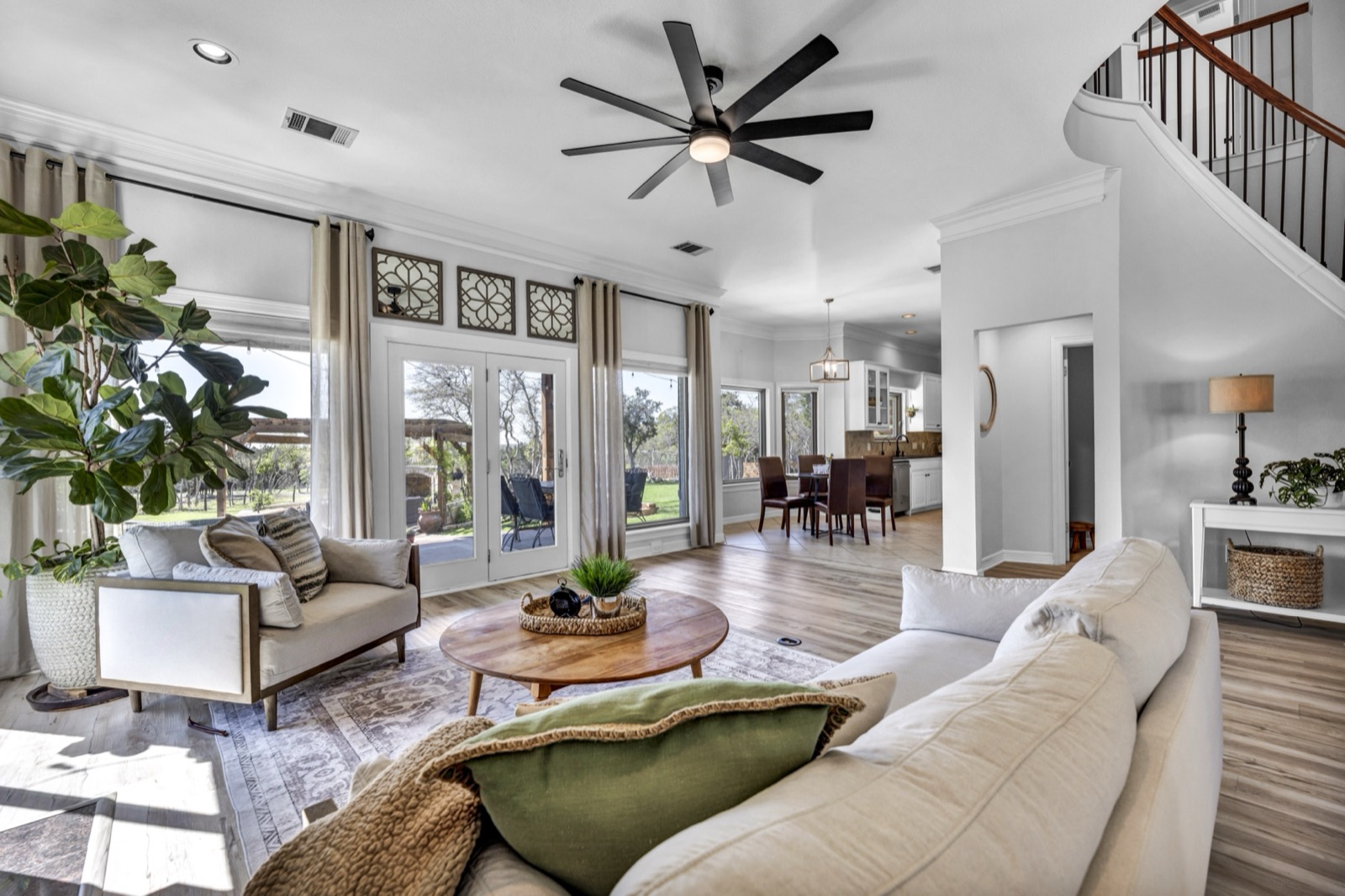
In today's Central Texas market, buyers comparison-shop like analysts—and the first fourteen days of your listing do most of the work. Here's how to set a price the market will validate, instead of one it has to correct.
Pricing a home was easy during the frenzy years: pick a number, collect offers, apologize to the losers. That market is gone across the Georgetown area and most of Central Texas. Inventory has grown, homes take longer to sell— commonly two to three months rather than two to three weekends—and buyers can compare your home against a dozen alternatives, including brand-new construction with incentive budgets attached.
None of this means sellers can't do well. It means pricing has been promoted from a guess to a strategy. The sellers who succeed in a balanced market share a pattern: they price against the evidence rather than their hopes, prepare the home so the price looks justified in the first ten photos, and plan their response to the market's feedback before the sign goes in the yard. This guide walks through that playbook—from reading comps correctly to structuring price adjustments to evaluating offers on more than the headline number.
Price Against Two Markets: What Sold, and What's for Sale
Most sellers understand comparable sales—recently closed homes similar to yours in location, size, condition, and age. Fewer appreciate that closed comps are the rear-view mirror. Your buyer isn't shopping the past; they're shopping the active market: every similar home for sale right now within their search area, plus the builder inventory down the road.
A sound pricing exercise does both:
- Closed sales (last 90 days, closest first): establish the value range appraisers will use. Adjust honestly for condition, updates, lot, and location—the market does.
- Active and pending competition: establish your position. If three comparable homes are listed at $485,000 and yours goes live at $510,000 without a visible reason, you just improved their odds, not yours.
- Expired and withdrawn listings: the market's rejection pile. They show what buyers refused to pay—often the most instructive data set.
One more discipline: use the spring-and-fall reality of your own micro-market, not metro headlines. Conditions in a Sun City resale, a Liberty Hill master-planned community, and a rural Florence acreage listing can diverge meaningfully in the same month.
The New-Construction Problem (and How to Answer It)
Across Williamson County, resale sellers compete with builders—and builders compete hard. When a builder needs to move standing inventory, they can offer closing-cost contributions, mortgage-rate buydowns, or design-center credits worth tens of thousands of dollars in effective value, all without touching their advertised price.
If comparable new construction exists within your buyer's search radius, your pricing must account for the builder's effective price after incentives, not their sticker. Then make the resale case new construction can't: an established neighborhood with finished streets and mature trees, completed landscaping, window coverings, and upgrades a builder would charge for, a known (often lower) tax rate versus a new community's MUD or PID stack, and no construction traffic or buildout uncertainty. Those advantages are real, but they only translate into dollars if your listing communicates them explicitly.
Condition and Preparation: The Cheapest Price Support You Can Buy
In a comparison-shopping market, condition issues don't just lower offers—they filter you out of showings entirely. Preparation is the highest-leverage money most sellers spend, and it follows a hierarchy:
- Fix what's broken. Dripping faucets, cracked panes, dead outlets, the AC that struggles—small defects read as deferred maintenance and invite buyers to imagine larger ones.
- Neutralize and declutter. Buyers need to see the house, not the household. Paint in current neutrals where walls are dated or bold.
- Address the Central Texas basics. Foundation watering history, roof age (hail matters here), HVAC service records, and—on acreage—well and septic service documentation. Have answers ready before buyers ask.
- Curb impression. Mulch, trimmed trees, a clean entry. The exterior photo determines whether the interior photos get viewed.
- Stage strategically, not exhaustively. Prioritize the living area, primary bedroom, and kitchen; empty homes in some price bands benefit from partial staging.
A pre-listing inspection is worth considering in this market: it lets you fix or disclose issues on your terms rather than negotiating them under deadline after a buyer's inspector finds them.
Photography and Presentation: The First Showing Is Online
Nearly every buyer's first showing happens on a phone screen. Professional photography is the minimum stake, not a differentiator—shot after preparation is complete, in good light, with an accurate and generous photo set. In this area, aerial photos earn their cost for acreage, greenbelt, or amenity-adjacent properties, and floor plans consistently rank among the features buyers use most. Listing copy should do the quiet work the photos can't: name the tax rate if it's an advantage, the recent big-ticket replacements (roof, HVAC, water heater, windows), and the things buyers here actually search for—shop or RV parking, office space, no-carpet interiors, outdoor living.
Pricing Bands: Price Where Your Buyers Search
Buyers search in round-number bands—up to $450,000, $450,000–$500,000, and so on. A home priced at $505,000 is invisible to every buyer whose search caps at $500,000, and those may be its likeliest buyers. Two practical rules follow. Price on or just under the band edge, not just over it: $499,900 appears in one large search pool; $505,000 appears in a smaller, different one. And don't “leave room to negotiate” by pricing above the evidence—in a balanced market, padding doesn't create negotiating room; it creates silence. The showings you don't get are invisible, and they're the price of overpricing.
Days on Market and the Adjustment Plan
Decide before listing how you'll interpret the market's feedback. A workable framework for the current pace:
- Weeks 1–2: peak exposure. Healthy showing activity but no offers usually signals a modest gap; strong traffic with critical feedback points to a fixable presentation issue. Few or no showings signals a price problem, not a marketing problem.
- Weeks 3–4: if showings have stalled, adjust decisively—enough to enter the next buyer pool (typically a move across a search band, not a token $5,000). One meaningful adjustment outperforms three timid ones, each of which re-advertises the listing's age.
- Beyond 60 days: re-evaluate the whole package—price, photos, copy, access—against what has sold since you listed. The market has moved; your comps are stale.
Stale listings invite low offers in any market. The goal of an adjustment plan is to stay ahead of that curve rather than chase it down.
Evaluating Offers: The Headline Number Is One Line of Many
When offers arrive, resist ranking them by price alone. In this market, terms routinely swing thousands of dollars of real value:
- Financing strength: underwritten pre-approvals and sensible loan-to-value beat a higher number from a shakier file.
- Concessions requested: a $500,000 offer asking $15,000 toward closing costs is a $485,000 offer wearing a nicer coat.
- Option period and earnest money: in Texas, the option fee buys the buyer unrestricted termination. Shorter option periods and stronger earnest money signal commitment.
- Appraisal risk: at aggressive prices, ask how the buyer handles a low appraisal—gap coverage language matters.
- Timeline and contingencies: a home-sale contingency is a real risk to price in; a flexible closing or leaseback may be worth real money to you.
Appraisal and Inspection: The Two Renegotiation Gates
A contract price must survive two checkpoints. The appraisal: if your price outruns the closed-comp evidence, the buyer's lender may value the home lower, reopening negotiation. This is another reason evidence-based pricing wins —it tends to appraise. Keep a file of your supporting comps and improvements for the appraiser. The inspection: virtually every Texas resale contract includes an option period, and virtually every inspection finds something. Plan your posture in advance—which categories you'll repair, credit, or decline—and remember that once you have a report in hand, Texas seller-disclosure obligations follow you to the next buyer if this one walks. Pricing slightly with the inspection in mind, or pre-inspecting, reduces the odds of a second negotiation you didn't budget for.
Seller Preparation Checklist
- Gather documents: survey, T-47, warranties, service records, HOA docs, well/septic records if applicable.
- Complete the seller's disclosure accurately and thoroughly—it protects you.
- Consider a pre-listing inspection; fix or disclose accordingly.
- Complete repairs and paint before photography.
- Declutter, depersonalize, deep-clean; stage key rooms.
- Commission professional photos (plus aerials/floor plan where warranted).
- Set the price against closed, active, and expired evidence—including builder incentives nearby.
- Position within the correct search band.
- Agree on the adjustment framework and calendar triggers in writing with your agent.
- Decide your inspection-negotiation posture in advance.
- Keep the home show-ready and access easy; restricted showings are quiet price cuts.
The Bottom Line
Pricing in today's Central Texas market is an evidence problem, not a confidence problem. Read the closed sales for value, the active listings for position, and the builders for what your real competition costs after incentives. Prepare the home so the price looks inevitable, launch in the right search band, adjust decisively when the data says to, and weigh offers on their full terms. Do those things and the market treats you fairly—usually faster than sellers who started high and negotiated with silence.
Market pace, inventory, buyer behavior, builder incentives, and contract norms shift continually and vary by micro-market; figures and patterns described here reflect conditions as of mid-2026. Verify current data for your specific property and neighborhood—and consult your agent and, where relevant, TREC contract resources—before setting a price.