
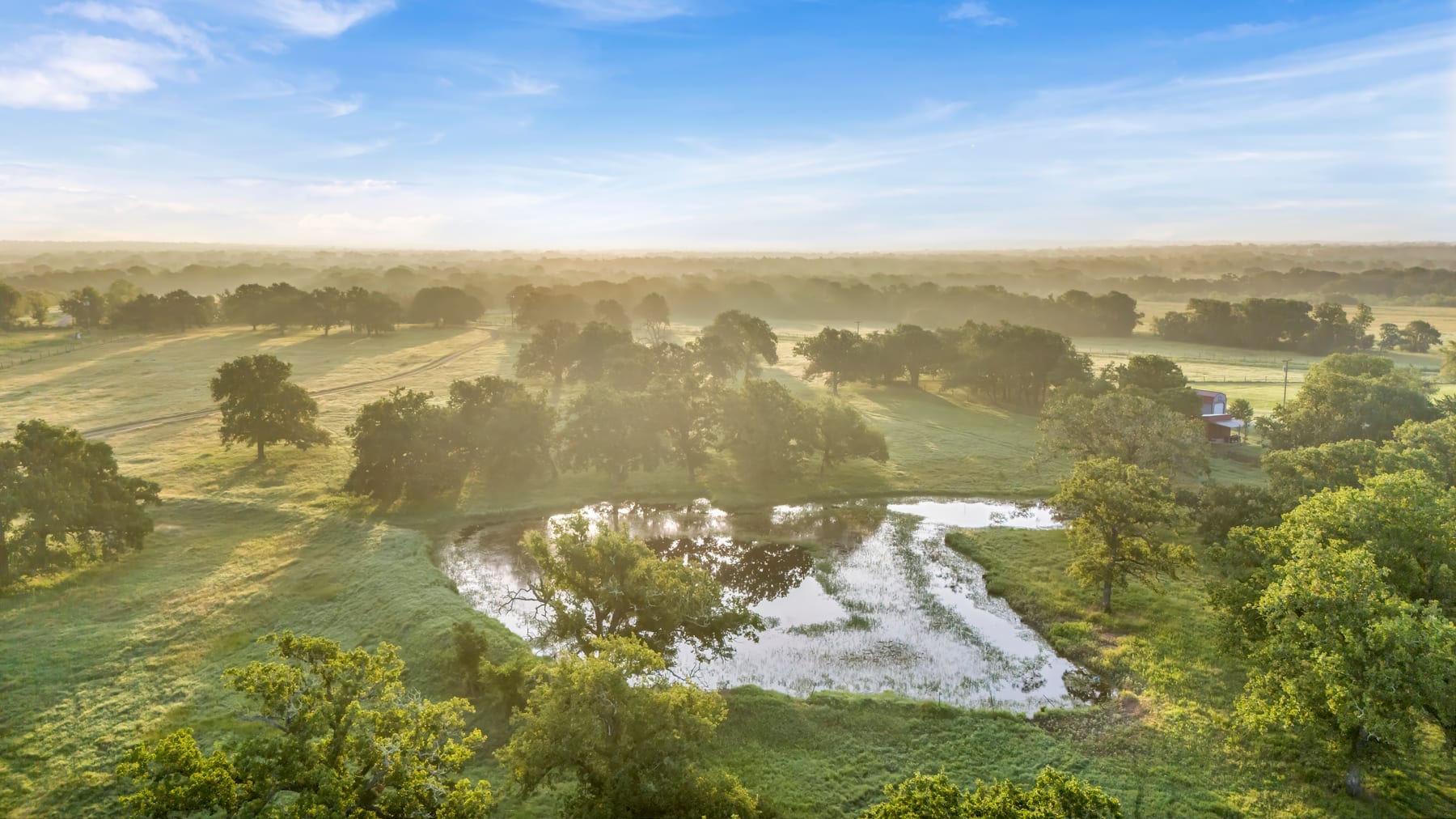
Granger at a glance
Granger is a historic northeastern Williamson County city whose official history traces its origin to an 1882 railroad intersection. Today the real-estate market pairs a compact town center with surrounding agricultural land and country property.
East of the city, Granger Lake is managed by the U.S. Army Corps of Engineers for flood-damage reduction, water supply, and recreation. Lake proximity can be a meaningful lifestyle feature, but it does not guarantee water access or a view from a particular parcel.
Homes, land, and lake-area context
Granger listings may include older houses on in-town lots, renovated homes, rural residences, farms, pasture, and unimproved acreage. Compare the condition and service profile of the property as carefully as its acreage. Older town homes can bring renovation and system questions; rural tracts can bring well, septic, power, access, and site-work costs.
Near the lake and waterways, verify ownership boundaries, Corps land, easements, floodplain, and legal access. A nearby lake is not the same as private shoreline rights. The Granger homes and land guide covers these rural checks in more depth.
Routes and everyday logistics
Granger connects regionally through State Highway 95 and farm-to-market roads leading toward Taylor, Georgetown, Bartlett, and the lake. Drive times should be tested from the exact property because county-road access and rail crossings can change the practical trip.
Buyers who need frequent access to major retail, healthcare, or employment should map those trips before choosing acreage. Granger tends to reward buyers who accept a rural service pattern in exchange for land, a small-town center, and proximity to outdoor recreation.
Schools and city services
Granger ISD operates local elementary and secondary campuses. Always confirm district boundaries and the assigned campus using the property address.
Inside city limits, confirm current water, sewer, trash, road, and permit information with the City of Granger. Outside city limits, a property may rely on a well, septic system, rural electric service, and private or county-road access. Never infer the provider from a neighboring parcel.
What to verify before buying
- Property condition: Inspect foundations, roofs, electrical, plumbing, drainage, and additions on older homes.
- Survey and title: Confirm boundaries, easements, road access, mineral reservations, and any railroad, utility, or pipeline interests.
- Water and septic: Verify city connections or inspect and test private systems.
- Floodplain: Check official county and FEMA mapping, especially near the San Gabriel watershed, lake, creeks, and low farmland.
- Land use: Review restrictions, agricultural valuation, rollback exposure, soil, fencing, and the feasibility of planned improvements.
- Lake expectations: Confirm actual access, Corps boundaries, park rules, and whether any advertised lake benefit belongs to the property.
Who Granger tends to fit
Granger tends to fit buyers looking for a genuine small-town setting, rural land, or access to lake recreation without choosing a suburban master-planned environment. It is a more infrastructure-dependent purchase, so a careful survey, title review, utility check, and inspection are central to the search.
Compare Granger with Taylor for more city services, Weir for a location closer to Georgetown, and the rural Williamson County guide for other acreage markets.