
Local guide
Rural Williamson County Homes and Land
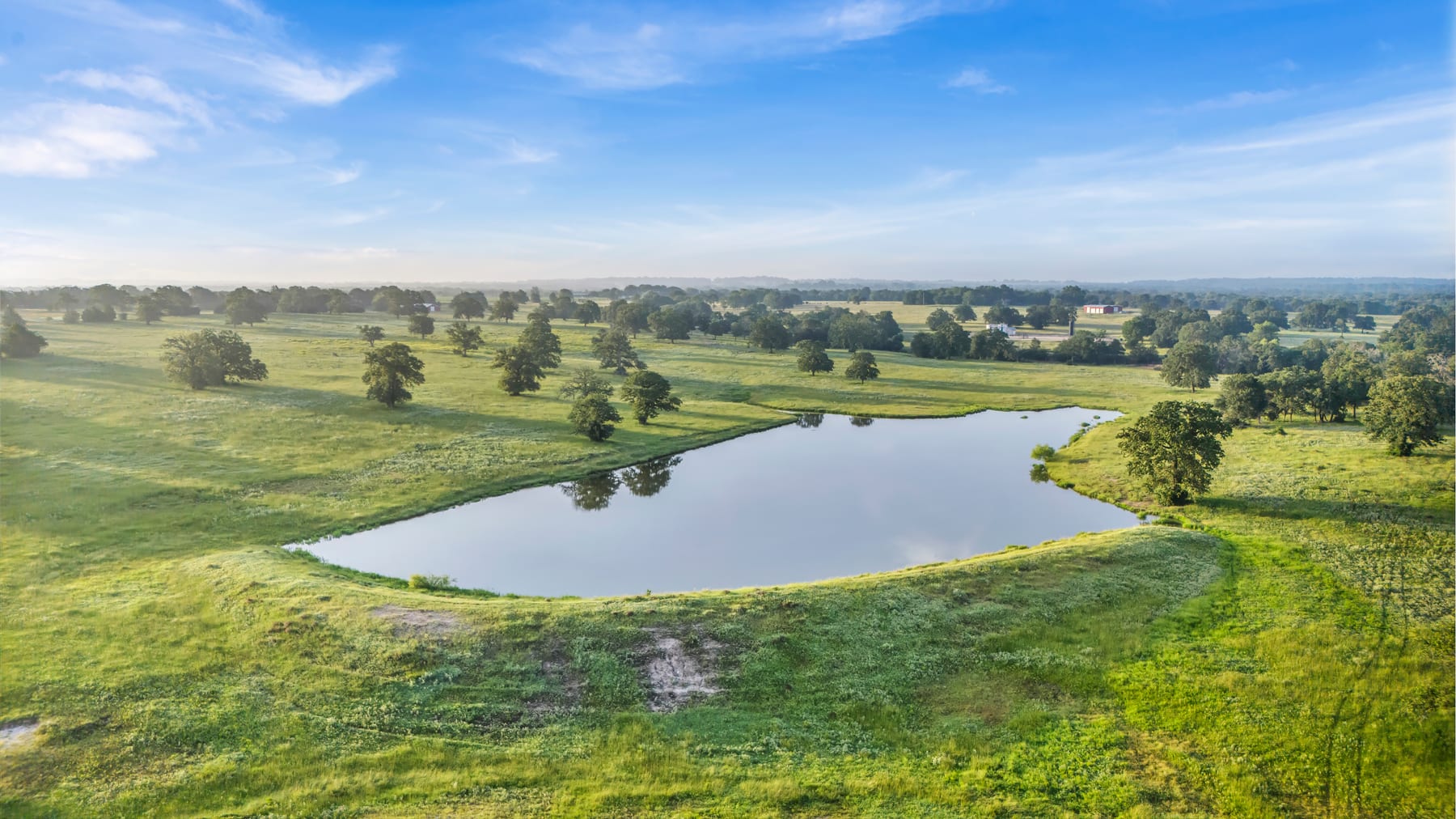
Rural Williamson County homes and land sit in the smaller communities ringing Georgetown.
Current property search
Rural Williamson County Land and Acreage.
Current Rural Williamson County listings matched to this page, with filters ready for further refinement.
Loading current listings
Page 1

Listings courtesy of Unlock MLS as distributed by MLS GRID.
Participant brokerage: All City Real Estate Ltd. Co.
Some IDX listings have been excluded from this website.
All data is obtained from various sources and may not have been verified by broker or MLS GRID. Supplied Open House Information is subject to change without notice. All information should be independently reviewed and verified for accuracy. Properties may or may not be listed by the office/agent presenting the information.
The information provided is exclusively for consumers' personal, noncommercial use and may not be used for any purpose other than to identify prospective properties consumers may be interested in purchasing. Data is deemed reliable but is not guaranteed by MLS GRID.
Use of MLS GRID data may be subject to an end user license agreement prescribed by the applicable MLS, if any, as amended from time to time.
Any use or search of data on this website, other than by a consumer looking to purchase real estate, is prohibited. Report accuracy concerns to michaelrmoody@gmail.com or 512-496-0317.
Where to Find Rural Homes and Land in Williamson County
Williamson County is best known for fast-growing Georgetown, Round Rock, Leander, and Liberty Hill, but a large share of the county is still working farmland, ranch land, and small towns. The rural communities most buyers compare include:
- Florence — northwest of Georgetown along SH 195 / FM 487; rolling land on the edge of the Hill Country, Florence ISD.
- Andice — a small crossroads community northwest of Georgetown near Liberty Hill, known for open land and Hill Country terrain.
- Weir — a small community just northeast of Georgetown, close to town while still rural in feel.
- Granger — northeast near Granger Lake; historic small town with surrounding farmland, Granger ISD.
- Thrall — east of Taylor; agricultural community, Thrall ISD.
- Coupland — southeast corner of the county; small rural community with a historic core, Coupland ISD.
Each of these has its own school district, utility footprint, and land character, so treat them as distinct markets rather than interchangeable. You can read the dedicated guides for Florence, TX homes and land, Weir, TX homes and land, Granger, TX homes and land, Thrall, TX homes and land, and Coupland, TX homes and land for the local detail.
What makes buying rural land different
A subdivision home comes with a known set of utilities, an HOA, and a tidy survey. Rural acreage rarely does. The biggest differences fall into a handful of categories.
Water. Many rural properties rely on a private water well rather than a municipal or co-op water line. You'll want to know whether a well already exists, its depth, flow rate, and water quality, or whether you'd be drilling one. Where a public water supply line is available, verify the connection cost and any meter availability.
Wastewater. Without city sewer, properties use an on-site sewage facility (OSSF) — a septic system. Confirm whether a permitted system exists, its type and condition, and whether the soil supports the system size your plans require. New systems require permitting through the county.
Electricity and other utilities. Rural electric service is often provided by an electric cooperative rather than a city utility, and bringing power to a remote building site can carry real cost. Internet, propane, and cell coverage also vary widely by location.
Access. Confirm legal, deeded access to the parcel — frontage on a public road, or a recorded easement across neighboring land. Shared driveways and unrecorded "we've always used it" access can become problems later.
Floodplain. Check FEMA flood maps for the parcel. Land near creeks, the San Gabriel forks, Granger Lake, or low-lying farmland can include floodplain that affects building sites and insurance.
The rural land due-diligence checklist
Before you write or finalize an offer on rural Williamson County homes and land, work through this list with your agent, a title company, a surveyor, and the county:
- Survey — get a current boundary survey; don't rely on an old one or fence lines.
- Access — verify deeded road frontage or a recorded easement to a public road.
- Water — confirm well existence, depth, flow, and water test, or public-water availability and tap cost.
- Septic / OSSF — confirm a permitted, functioning system, or that the soil and lot support a new one.
- Electric & utilities — identify the electric co-op or provider and the cost to run service to your build site.
- Floodplain / FEMA — pull the FIRM panel and identify any floodplain on the parcel.
- Deed restrictions & easements — review for limits on use, livestock, mobile homes, subdividing, or commercial activity.
- Ag / wildlife valuation — confirm whether the tract carries a special-use appraisal and understand rollback-tax exposure if use changes.
- Title — order a title commitment and read every exception; pipelines and utility easements are common.
- Financing — line up a lender experienced with land or rural-residential loans early (see below).
- Taxes — verify the full tax picture: county, school district, and any ESD or special district.
Ag valuation, wildlife management, and rollback taxes
Many rural tracts in Williamson County are appraised under a special agricultural-use ("ag exemption") or wildlife-management valuation, which can dramatically lower the property's taxable value while the qualifying use continues. Two things matter for buyers:
- Keeping the valuation usually requires continuing a qualifying use (grazing, hay, crops, or an approved wildlife-management plan). Confirm what the current owner does to qualify.
- Rollback taxes can be triggered when the land's use changes to non-agricultural — for example, building a homestead on what was pasture. The taxing units can recover a portion of the tax savings from prior years, plus interest. Understand who pays this in your contract.
This is exactly the kind of detail that's easy to miss and expensive to learn late. The Williamson Central Appraisal District (wcad.org) is the place to verify a parcel's current valuation.
Financing rural homes and land
Financing a country property isn't always the same as financing a subdivision home. A finished home on a few acres may qualify for conventional financing, while raw land, large acreage, or a build-on-your-lot plan often needs a land loan or a construction or rural-development loan with different down-payment and term expectations. USDA rural-development programs may apply in some areas. The practical takeaway: talk to a lender who does rural and land loans before you shop, so your offers match what you can actually close.
Who rural buying suits — and who it doesn't
Rural living rewards buyers who want space, privacy, room for animals or projects, and a slower pace, and who are comfortable owning their own infrastructure — a well to maintain, a septic system to service, a longer drive to a grocery store or hospital. It suits people who value land and lifestyle over walkability and amenities.
It's a harder fit for buyers who want short commutes, city services, fast internet without planning ahead, or the predictability of an HOA-managed subdivision. If you're weighing rural against a near-in option, it's worth comparing acreage choices side by side — the guide to best areas near Georgetown for acreage and Liberty Hill acreage homes and land are good companions, and the broader Williamson County real estate overview puts the rural towns in context.
Nothing about rural ownership should be framed as a "good" or "bad" area — it's about property type, land use, utilities, and lifestyle fit. Verify school zones by address with the relevant district, and verify taxes with the county.
In practice: what buyers miss
The most common surprises Michael sees aren't about price — they're about access and infrastructure. A beautiful tract with no recorded easement. A "well on the property" that turns out to be low-yield or untested. A septic system sized for a two-bedroom cabin when the buyer wants a four-bedroom home. A pasture with ag valuation that triggers a rollback tax the year the homesite goes in. None of these are deal-killers when you know early; all of them are headaches when you find out at closing. The fix is the same every time: due diligence before emotion, and a contract with enough time to do it.
Your local agent
Georgetown-rooted. Williamson County focused.
Michael Moody is a Broker Associate with All City Real Estate, helping clients compare Georgetown first, then the nearby communities when the search or sale plan expands.

Primary market
Georgetown, TX

Brokerage
All City Real Estate

Phone

FAQ
Direct Answers.
A quick pass through the questions that tend to matter before a search, sale, or area decision.
The most-compared rural communities are Florence and Andice to the northwest, and Weir, Granger, Thrall, and Coupland to the east and northeast. Each has its own small-town character, school district, and utility footprint, so they're best treated as separate markets. Specific boundaries, school zones, and prices should be verified by address.
Usually not. Many rural homes and land tracts rely on a private water well and an on-site septic system (OSSF) rather than municipal water and sewer. Some areas have public-water lines available. Always confirm what serves a specific parcel — and the cost to connect or install — with the provider and the county.
An agricultural or wildlife-management valuation lets qualifying land be appraised on its productive use rather than market value, lowering taxes. If the use changes — say, you build a home on former pasture — a rollback tax can recover some prior savings plus interest. Confirm a parcel's status and rollback exposure with the appraisal district.
Verify the parcel has frontage on a public road or a recorded easement granting access across neighboring land. A current survey and a title commitment will reveal access rights and easements. Avoid relying on informal or unrecorded access — get it in the title work before closing.
It can be. A finished home on acreage may use conventional financing, but raw land, large acreage, or build-on-your-lot purchases often require land or construction loans with different terms and down payments. USDA rural programs may apply in some areas. Talk to a rural-experienced lender before shopping.
Yes. Fence lines and old surveys frequently don't match the legal boundaries. A current boundary survey identifies acreage, encroachments, easements, and floodplain edges, and it protects you when access or building-site decisions depend on exact lines. It's one of the most worthwhile expenses in a land purchase.
It depends entirely on location — rural Williamson County includes Florence ISD, Granger ISD, Thrall ISD, Coupland ISD, and others, and Georgetown-area addresses can fall into different districts. Never assume; verify the zoned district by exact address with the district and county.
Yes. Michael Moody, REALTOR® and Broker Associate with All City Real Estate, helps buyers compare rural communities, run land due diligence, and coordinate surveyors, lenders, and title. Reach him at 512-496-0317 or michaelrmoody@gmail.com to start.
Talk with Michael
Talk Through the Next Move.
Share the search, sale, property, timeline, or city comparison on your mind. Michael can help turn it into a clearer next step.