A guided tour of the towns ringing Georgetown — what each one costs, who it suits, and how far you’ll really be driving to a job, a high school, or a Saturday HEB run.
There is a particular moment in every Central Texas home search when the map stops being a map and starts being a set of trade-offs. You can have more land or more amenities. You can have a shorter commute or a lower price. You can have a brand-new house on a quarter-acre or a mature lot under shade trees in a town that already has a downtown. Georgetown itself — the county seat, the Red Poppy Capital of Texas, the place the Census Bureau crowned the nation’s fastest-growing city three years running — sits at the center of that map. But the towns orbiting it each tell a different version of the same Williamson County story, and choosing among them is the real work of buying a home up here.
This is a guided tour of those orbiting towns: Liberty Hill, Leander, Round Rock, Jarrell, and Hutto, with a nod to where Georgetown fits in the constellation. We’ll walk through distance and commute, prices, schools, vibe, and — the question that actually matters — who each place is for. A summary table near the end lets you compare them at a glance.
How to Read the Map
Williamson County is laid out along a few spines. I-35 runs north-south through Georgetown, Round Rock, and (further north) Jarrell. Highway 29 runs west out of Georgetown toward Liberty Hill. The 183A toll road carries the southwest corridor through Leander, and US-79 / the eastern side reaches Hutto and, beyond it, Taylor and the new Samsung semiconductor plant reshaping the regional job map.
Keep three things in mind as you read. Prices here are approximate, current as of mid-2026, and move month to month. School-district lines do not follow city limits — a Georgetown mailing address can sit in Georgetown ISD, Liberty Hill ISD, or Leander ISD depending on the exact lot. And “commute to Austin” depends enormously on which Austin: north Austin and the Domain are far closer than downtown.
Liberty Hill: Land, Hill Country, and Explosive Growth
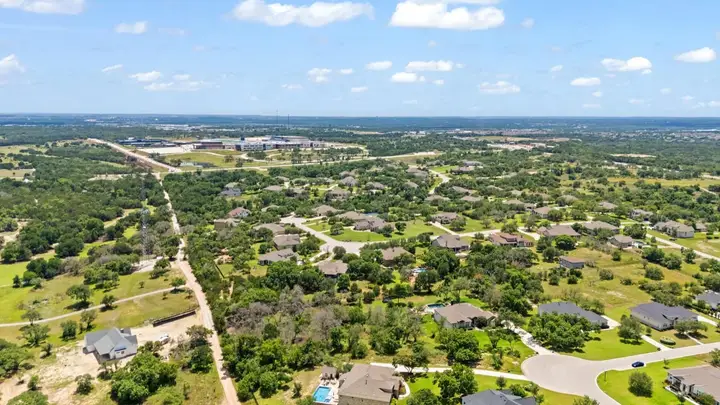
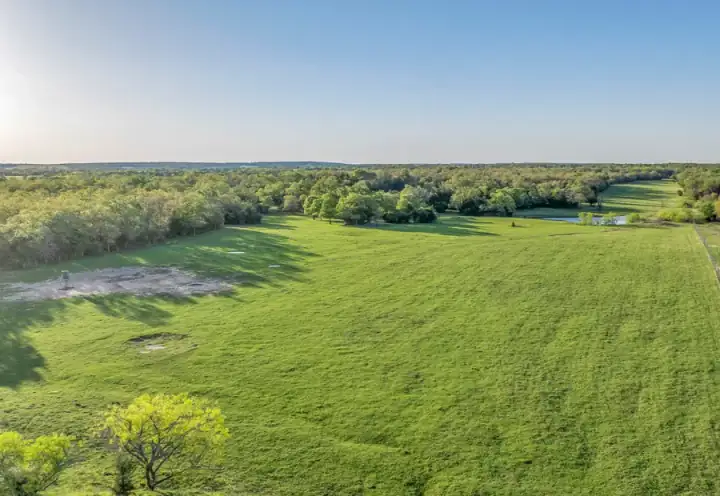
Drive twelve miles west of Georgetown on Highway 29 and the landscape opens up. Liberty Hill is the Hill Country edge of the metro — rolling, rural, and growing at a pace that’s hard to believe until you see the subdivisions rising out of former ranchland. The 2020 Census counted roughly 3,680 residents; current estimates put the town past 15,000, a 300-percent-plus surge in a handful of years.
What draws people is space. Liberty Hill offers more land and acreage homesites than almost anywhere else this close to Austin, alongside polished master-planned communities like the award-winning Santa Rita Ranch, plus Stonewall Ranch, Orchard Ridge, Larkspur, and acreage enclaves such as Clearwater Ranch and Northgate Ranch. The median home price sits around $356,000 (2025) — attainable for the metro — and you can still find a downtown with an actual International Sculpture Park tucked into it.
Schools are a genuine draw: Liberty Hill ISD carries an “A” rating from the Texas Education Agency (verify any campus at txschools.gov), and the district is bracing for staggering growth — enrollment around 9,000 now, projected near 18,000 by 2030.
Who it suits: buyers who want elbow room, newer construction, strong schools, and Hill Country scenery, and who don’t mind a longer drive to the office. The trade-off is commute and convenience — you are genuinely out toward the country’s edge.
Leander: Rail, Retail, and Resort Amenities
Leander is the southwest corner of the orbit, straddling Williamson and Travis counties, and it has one thing none of its neighbors can claim: a train. The Capital MetroRail Red Line terminates at Leander Station, the northern end of a 32-mile route that runs through Lakeline, the Domain area, and into downtown Austin. For a commuter who’d rather read than drive, that rail line is the whole ballgame, and the new Northline transit-oriented district is building a walkable downtown around it.
Leander is also the most amenity-rich of Georgetown’s neighbors, with HEB, 1890 Ranch, and resort-style master-planned communities: Hill Country–draped Travisso, golf-anchored Crystal Falls, the award-winning Bryson, Palmera Ridge, and Deerbrooke among them. Leander ISD is one of the metro’s strongest districts, particularly at the middle- and high-school level. All of that polish carries a price: the Leander/Liberty Hill area median runs roughly $485,000–$492,000 (2024–25), the priciest tier in this group.
Who it suits: commuters who value the rail option, families prioritizing Leander ISD, and buyers who want retail, restaurants, and resort amenities at their doorstep — and have the budget to match.
Round Rock: The Established Suburb with a Job Engine
If Liberty Hill is the frontier, Round Rock is the established city — the largest in Williamson County at roughly 128,000 people, fifteen miles north of Austin on I-35. This is where the suburb feels finished: a revitalized historic downtown, mature neighborhoods, deep housing inventory, and the kind of infrastructure that takes decades to build.
It’s also a job engine. Round Rock is the global headquarters of Dell Technologies and home to Emerson, anchoring an employment base that means many residents commute to Round Rock rather than away from it. Add the “Sports Capital of Texas” identity — the Round Rock Express AAA baseball club at Dell Diamond, Old Settlers Park, Kalahari Resorts (America’s largest indoor waterpark), and the Premium Outlets — and you have a city that’s a destination in its own right. Median sale prices land roughly in the $370,000–$420,000 range, often a notch below Georgetown and Leander on entry pricing, with the deepest inventory in the county.
Who it suits: buyers who want an established suburb with everything already built, a short commute to a major employer, and more home choices at a moderate price than anywhere else nearby.
Jarrell: The Affordability Play
Fifteen miles north of Georgetown on I-35, Jarrell is the value frontier. The population went from about 1,811 in 2020 to roughly 6,800 by 2026 — roughly 14 percent annual growth — and the reason is plain in the numbers: a median listing price around $295,000 and median sold prices near $275,000 make it among the most affordable corners of the entire metro.
The flagship community is Sonterra, a large, affordable master-planned development with a clubhouse, pools, parks, and trails, built out by KB Home, Empire, and CastleRock, among others. Jarrell ISD is growing fast, with new middle and elementary schools planned by 2027. The trade-offs are real and honest: a longer commute, fewer amenities, and more highway-and-feeder-road living than town living.
Who it suits: first-time buyers, budget-focused families, and anyone willing to trade drive time and amenities for the lowest entry price and newest construction in the area.
Hutto: Hippos, the Co-Op District, and the Samsung Effect
Southeast of the others, about five miles east of Round Rock, sits Hutto — population somewhere between 35,000 and 41,000, mascot the beloved Hutto Hippo. Hutto has spent recent years building itself a center of gravity: The Co-Op District, a newer mixed-use downtown with retail, dining, entertainment, and City Hall.
The bigger story is just east. Samsung’s massive semiconductor plant in Taylor — still in Williamson County — is a regional job and housing catalyst, and Hutto sits squarely in its path. Hutto ISD is a single-high-school district (go Hippos) with a growing roster of elementary and middle schools. Median sold prices run around $370,000 (mid-2025), roughly $187 a square foot, with relatively attainable new construction.
Who it suits: buyers betting on the eastern Williamson County growth corridor, those who want new construction near a major emerging employer, and families drawn to Hutto’s distinct small-city identity.
Georgetown Itself: The Center of It All
It’s worth remembering why these towns orbit Georgetown in the first place. The county seat offers what its neighbors are still building: the Most Beautiful Town Square in Texas, Southwestern University, Sun City Texas (the largest 55+ community in the state), the master-planned Wolf Ranch, and Lake Georgetown with its 26-mile Goodwater Loop. Median sale prices sit in the low-to-mid $400,000s. For many buyers, the surrounding towns are the answer to a Georgetown price tag — or a Georgetown commute.
Summary Comparison Table
| Town | Distance from Georgetown | Median Home Price (approx.) | School District (rating) | Vibe | Best For |
|---|---|---|---|---|---|
| Liberty Hill | ~12 mi W (Hwy 29) | ~$356K | Liberty Hill ISD (“A”) | Rural, Hill Country, acreage | Space + new builds + scenery |
| Leander | ~SW (183A) | ~$485K–$492K | Leander ISD (strong) | Amenity-rich, rail-connected | Commuters, retail, resort living |
| Round Rock | ~10–12 mi S (I-35) | ~$370K–$420K | Round Rock ISD (large) | Established suburb, job hub | Move-in suburb near employers |
| Jarrell | ~15 mi N (I-35) | ~$275K–$295K | Jarrell ISD (growing) | Affordable, highway-edge | Budget buyers, first-timers |
| Hutto | ~SE (via Round Rock) | ~$370K | Hutto ISD (1 HS) | Small city, growth corridor | Eastern-corridor / Samsung bet |
| Georgetown | — | low-to-mid $400Ks | GISD (~97% grad) | Historic Square, full amenities | The complete package |
The Bottom Line
The best place to live near Georgetown isn’t a single answer — it’s a match between what you’re optimizing for and what each town does best. Want land and scenery? Liberty Hill. Rail and retail? Leander. A finished suburb near a big employer? Round Rock. The lowest price? Jarrell. A bet on the eastern corridor? Hutto. And if you want the whole package — historic Square, lake, top amenities — Georgetown itself still anchors the map. The smart move is to drive the commutes, walk the downtowns, and verify the school lines by address before you fall for a floor plan.
Market figures cited are approximate and current as of mid-2026; verify current data before making real estate decisions.