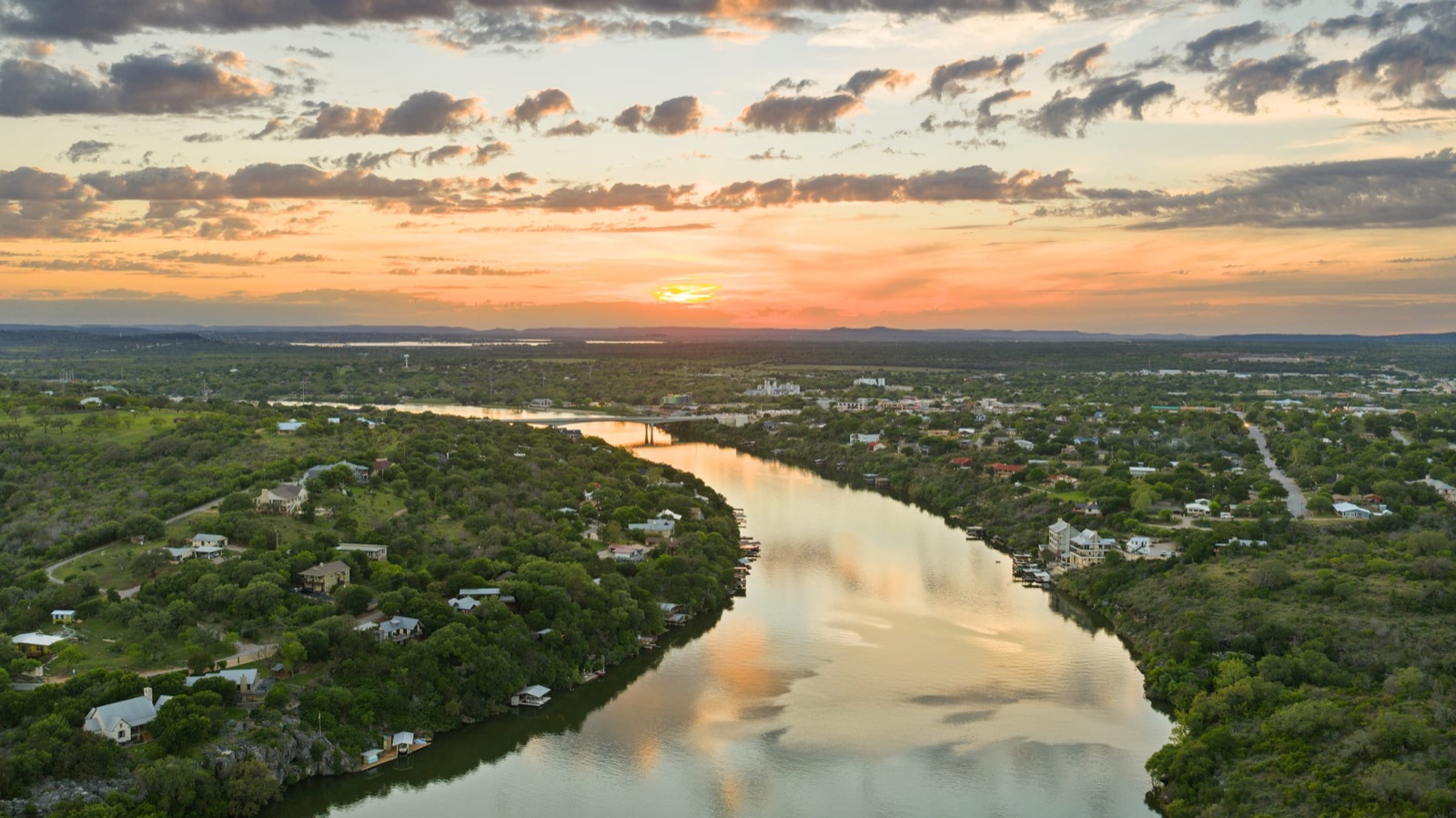
Lake property is bought with the heart and owned with a checklist. Before you fall for a Highland Lakes sunset, learn the difference between waterfront and water-access, between a constant-level lake and a storage lake— and why the well report matters as much as the view.
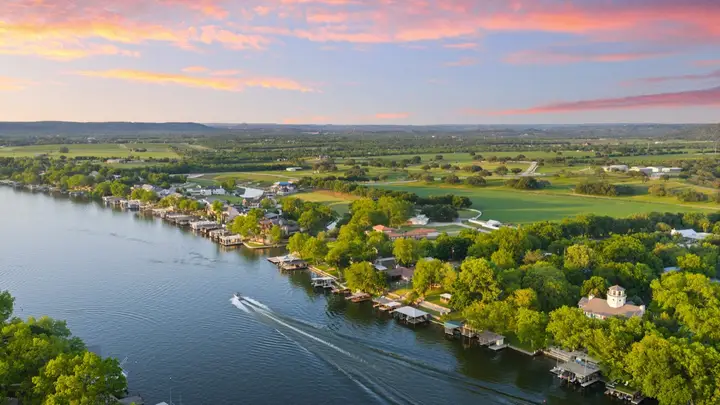
Drive forty-five minutes west of Georgetown and the landscape changes character: the Blackland Prairie gives way to granite, cedar, and a chain of reservoirs strung down the Colorado River like beads. These are the Highland Lakes —six lakes built between the 1930s and 1950s and managed by the Lower Colorado River Authority (LCRA)—and they anchor one of Texas's most beloved second-home and retirement markets.
They also anchor one of its most misunderstood. Lake property runs on a different rulebook than the subdivision market most buyers know: the lakes behave differently from one another, utilities may mean wells and septic rather than a city hookup, and floodplains, deed restrictions, short-term-rental rules, and terrain all carry more weight than they do in town. This guide covers the region and the rulebook—what the Highland Lakes are, where to base a search, what the property types really mean, and the due diligence that separates a good lake purchase from an expensive lesson.
What the Highland Lakes Are
The chain runs, upstream to downstream: Lake Buchanan, Inks Lake, Lake LBJ, Lake Marble Falls, Lake Travis, and Lake Austin, formed by dams operated by the LCRA. The crucial fact for buyers is that the lakes serve two different jobs. Buchanan and Travis are the system's water-supply reservoirs—their levels are designed to fluctuate, sometimes dramatically, with drought and flood cycles. Inks, LBJ, Marble Falls, and Austin are operated as pass-through lakes held at relatively constant levels in normal operations.
That single distinction drives pricing, usability, and risk across the region, and we'll return to it. For Georgetown-area buyers, the most relevant stretch is the Burnet County heart of the chain—Buchanan, Inks, LBJ, and Marble Falls—generally 45 minutes to an hour-plus west, which puts a weekend place within realistic reach of a Williamson County home base.
Burnet and Marble Falls: The Practical Base Camps
Burnet, the county seat, anchors the northern lakes—Buchanan and Inks—with a working courthouse square, essential services, and a mix of in-town homes, lake-area subdivisions, and surrounding acreage at some of the region's more accessible price points. Marble Falls anchors the southern half: the retail and medical hub for the mid-chain, with its namesake constant-level lake in the middle of town and Lake LBJ's communities—including resort-style developments such as Horseshoe Bay just across the river—nearby.
Starting a search from these two towns has a practical logic: they're where the groceries, hospitals, and tradespeople are. A remote lakeside bargain gets less charming when the nearest service call is an hour's billing away.
Waterfront, Water-Access, and Water-View Are Three Different Products
- Waterfront means the parcel meets the water—the premium product, priced accordingly, and the one where lake-level behavior, shoreline rules, and flood risk matter most. “Waterfront” on a fluctuating lake may mean water at your shoreline in wet years and a long walk to it in drought.
- Water-access means the property includes deeded or community access—a shared boat ramp, marina rights, or a community park—without private frontage. Often the value play; the diligence is confirming exactly what the access is, who maintains it, what it costs, and whether it's guaranteed in the deed or merely customary.
- Water-view means you can see the lake—until, in some cases, someone builds between you and it. Views are rarely protected unless deed restrictions explicitly protect them; verify before paying a view premium.
Listings blur these terms constantly. Make the seller's agent define which one is actually being sold, in writing.
Lake Levels: The Region's Defining Variable
Because Buchanan and Travis are storage reservoirs, their levels swing with Central Texas's boom-and-bust hydrology—full and spilling in wet cycles, then dropping through multi-year droughts until docks sit on dry land. The mid-2020s illustrated both extremes within a few seasons: severe drought lows, dramatic flood-driven recoveries in 2025, then renewed decline. LCRA's Hydromet publishes current and historical levels; study a property's usability across that history, not just the listing photos' water line.
Constant-level lakes (LBJ, Marble Falls, Inks, Austin) are operationally steadier—a big part of why Lake LBJ waterfront commands the prices it does—but “constant-level” is not “risk-free”: these lakes are periodically lowered on schedule for dock maintenance, and floods affect them too. For any waterfront property, ask what the shoreline looks like at historic lows, where the dock sits, and what LCRA's current dock and dredging rules are for that lake. On fluctuating lakes especially, buy the property that works at low water; high water takes care of itself.
Wells, Septic, Utilities, and Roads
Much of the Highland Lakes housing stock sits outside city utility service. That means:
- Water: private wells (test production and quality; hill-country aquifers vary street to street), small water-supply corporations, or—in some lakeside subdivisions—systems drawing from the lake itself. Each has different reliability and cost profiles; identify which you're buying.
- Wastewater: septic systems, permitted through the county. Age, type (conventional vs. aerobic), maintenance contracts, and whether the system matches the home's bedroom count all belong in diligence—especially near the water, where regulations are tighter.
- Power and connectivity: electric cooperatives serve much of the region; internet options range from cable in town to fixed wireless and satellite elsewhere. If remote work is part of the plan, verify service at the address, not the town.
- Roads: plenty of lake roads are private or subdivision-maintained. Confirm who maintains the road, what it costs, and whether access is deeded—an unrecorded handshake easement is a future dispute.
Floodplain, Insurance, Terrain, and Drainage
Central Texas is flash-flood country, and lake parcels concentrate the risk: the most desirable ground is often the lowest. Pull the FEMA flood map for the parcel and note where the floodplain line crosses it; lenders require flood insurance for structures in high-risk zones, and premiums belong in your ownership math from the first showing. History matters too—ask what past floods did to the property and its dock. Terrain is the quieter cost: granite and steep slopes make foundations, driveways, and septic fields more expensive; runoff patterns can send a hillside's water through an unlucky lot. A survey with topography, and a foundation-literate inspector, earn their fees here.
Deed Restrictions, POAs, and Short-Term-Rental Rules
Lake-area subdivisions are commonly governed by property owners' associations (POAs) and recorded deed restrictions—some decades old, some resort-grade strict. Before contracting, read the actual recorded documents for: minimum square footage and build requirements (on lots), rules on RVs, boats, and outbuildings, dock and shoreline rules layered atop LCRA's, and—critically for many buyers—short-term-rental policy. If rental income is part of your underwriting, verify three layers independently: the POA/deed restrictions, the city's ordinance and permitting if the property sits inside city limits, and county rules otherwise. STR regulation across the region is actively evolving; a listing's “STR-friendly!” is a marketing claim, not a legal opinion. Get the current rules in writing from the actual authorities.
Second Home vs. Full-Time: Decide Before You Shop
The same house can be a wonderful weekend place and a frustrating residence. Full-timers need what weekenders can shrug off: proximity to medical care and groceries, reliable internet, year-round road access, and a neighborhood that isn't empty all winter. Weekenders should weigh what full-timers don't: security for an unoccupied house, freeze protection, and honest math on how often the round trip will actually happen. Tax treatment differs too—homestead exemptions apply only to a primary residence. Naming the use case first filters the map, the lake, and the budget better than any other single decision.
Acreage and Land Around the Lakes
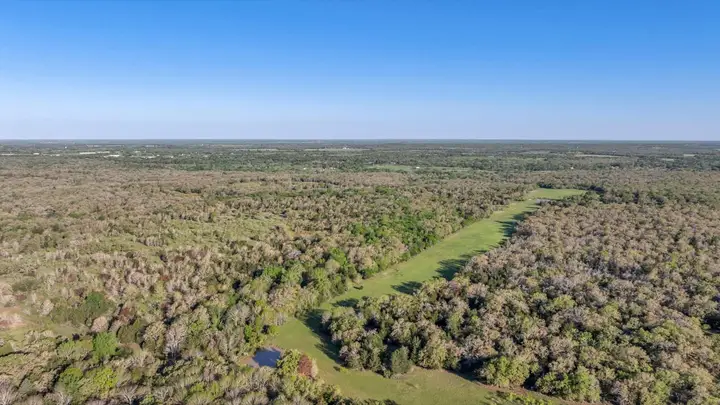
Beyond the shoreline subdivisions, Burnet and Llano counties offer the classic hill-country combination: acreage with long views, sometimes with distant water glimpses, at prices that undercut waterfront dramatically. The acreage rulebook applies—wells, septic feasibility, floodplain, access easements, fencing, and agricultural exemptions (with rollback-tax consequences if the use changes)—plus one lake-specific note: “near the lake” acreage with no deeded access means your lake day starts at a public ramp like everyone else's. If access matters, buy access, not adjacency.
Maintenance and Inspection: What Lake Ownership Actually Costs
Budget past the mortgage. Docks and lifts need periodic repair and eventual replacement; sun and humidity work on exteriors relentlessly; wells, septic, and water-treatment equipment have service schedules; and insurance often runs higher than an equivalent house in town. On inspection, go beyond the standard resale package: dock and lift condition, well production and water-quality testing, septic inspection with permit records, foundation behavior on slope, and drainage. For older lake cottages—and the region has generations of them—assume additions and systems evolved informally until permits prove otherwise.
The Lake-Property Due-Diligence Checklist
- Classify the property honestly: waterfront, water-access, or water-view—confirmed in writing.
- Study the lake's level history (LCRA Hydromet) and the shoreline at historic lows.
- Confirm dock legality, condition, and current LCRA/POA rules for modifications.
- Pull FEMA flood maps; price flood insurance before the option period ends.
- Test the well (production and quality) or document the water provider; inspect septic with permits.
- Verify electric provider, internet options, and road maintenance/access easements.
- Read the recorded deed restrictions and POA documents—including STR rules—yourself.
- Verify STR legality at city/county level if rental income matters.
- Order terrain-appropriate inspections: foundation, drainage, dock/lift.
- Confirm taxing entities and exemption status (homestead vs. second home; ag exemptions on land).
- Map drive times to groceries, medical care, and your primary home—then drive them once.
The Bottom Line
The Highland Lakes reward exactly the buyers who respect their rulebook. Decide the use case first, pick the lake whose behavior matches it, classify the water relationship honestly, and run the full rural-property diligence—levels, floodplain, well, septic, restrictions, access—before the view closes the deal for you. Do that, and a Highland Lakes property becomes what it should be: the best decision you make all decade, with paperwork to prove it.
Lake levels, LCRA rules, short-term-rental regulations, insurance costs, and market conditions in the Highland Lakes change continuously—some of them week to week. Verify current facts with LCRA, FEMA, the relevant county and city, and the recorded deed documents before making any lake-property decision.