A hippo mascot, a buzzing new downtown, and a multibillion-dollar chip plant rising next door. Here’s an honest look at whether Hutto belongs on your shortlist.
Every fast-growing suburb has a story, and Hutto’s is told partly through its mascot: a hippo, planted on signs and storefronts all over town, a quirky bit of identity that locals lean into with pride. But the real story in this southeastern Williamson County town is bigger than the Hutto Hippo. Just east, in Taylor, one of the largest manufacturing investments in Texas history is reshaping the regional job map — and Hutto sits right in its path.
So is Hutto a good place to buy a home? Increasingly, the answer is yes — with the honest caveats every growth town carries. Here’s the breakdown.
Growth and Identity
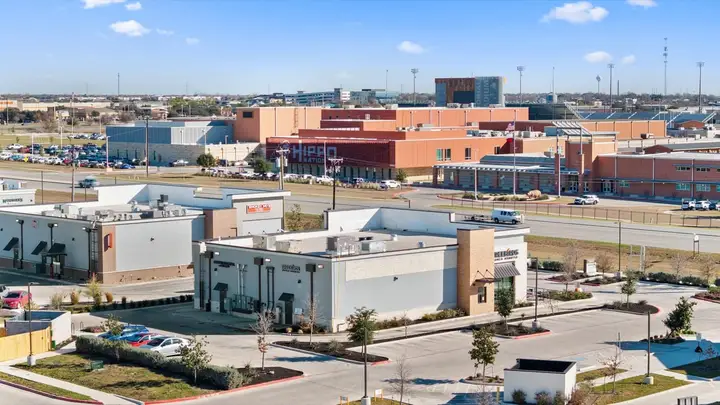
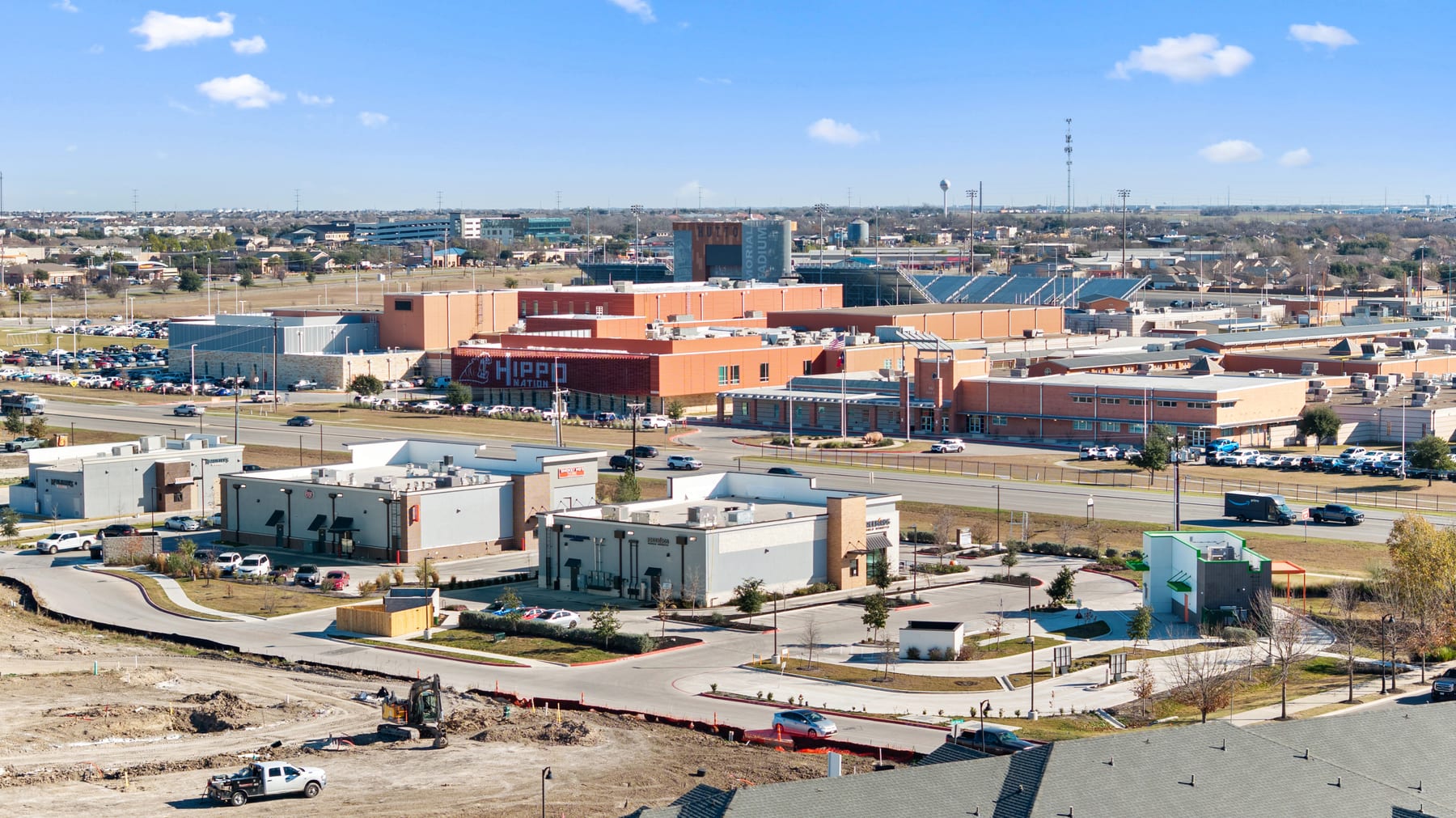
Hutto has transformed from a small farming community into a metro suburb of roughly 35,000 to 41,000-plus residents, about five miles east of Round Rock. The town has worked hard to build a sense of place rather than just bedroom-community sprawl, and the centerpiece is The Co-Op District — a newer mixed-use downtown development blending retail, dining, entertainment, and City Hall into a walkable core. That kind of intentional downtown is exactly what young suburbs often lack, and it gives Hutto a center of gravity beyond its subdivisions.
The Samsung Catalyst
You can’t talk honestly about buying in Hutto without talking about Samsung’s semiconductor plant in Taylor, just east in Williamson County. The massive chip-manufacturing investment is a generational economic catalyst — the kind of anchor employer that drives sustained housing demand, supports local businesses, and tends to put a floor under home values across the surrounding area.
For a buyer, proximity to a major job engine matters. It means renters and future buyers, it means commercial development following the rooftops, and it means Hutto’s growth story has real economic fuel behind it rather than just speculative expansion. A region that adds thousands of well-paid manufacturing and supplier jobs tends to keep demand for housing healthy through ordinary market cycles, which is exactly the kind of tailwind a homebuyer wants at their back. That’s a meaningful point in Hutto’s favor.
Hutto ISD
Families will want to look closely at Hutto ISD, a single-high-school district anchored by Hutto High, with seven elementary campuses and two middle schools and growing to keep pace with the population. A single-high-school district has its charms — a unified community identity, that Hippo Nation spirit on Friday nights — and the district continues to add capacity. As always with a fast-growing district, check current TEA ratings and verify your assigned campuses by address.
Prices and Value
Hutto offers relatively attainable new construction. As of mid-2025, the median sold price ran around $370K, roughly $187 per square foot — sitting below Georgetown’s low-to-mid $400,000s while still giving buyers access to newer homes and the Co-Op District lifestyle. It’s a sensible middle ground: more affordable than the pricier northern suburbs, with more built-in amenity and downtown energy than the cheapest outlying towns.
The Commute
Hutto’s location is a genuine advantage. Five miles east of Round Rock puts you close to the Dell-anchored Round Rock job base, within reach of the broader north-Austin employment corridor, and increasingly near the Taylor/Samsung jobs to the east. You’re not on the I-35 spine, which can be a blessing, but you’ll rely on connecting routes to reach Austin proper — figure a typical suburban commute that lengthens in peak traffic. For workers tied to the eastern and northern metro, Hutto’s position is hard to beat.
Pros and Cons
Pros: - A real, walkable downtown in The Co-Op District. - Major job catalyst nearby with the Samsung plant in Taylor. - Attainable new construction (around $370K median, ~$187/sq ft in 2025). - Strong community identity and good positioning relative to Round Rock and Taylor jobs. - No state income tax; Texas homestead and over-65 exemptions apply via the Williamson Central Appraisal District.
Cons: - A single-high-school district may not suit every family’s preferences. - Rapid growth brings traffic, construction, and infrastructure catch-up. - Many newer communities carry MUD or PID obligations — total those with property tax for true cost. - Less established than Round Rock or Georgetown in retail depth and history.
Who Hutto Suits
Hutto fits buyers who want attainable new construction with a genuine downtown, workers tied to the Round Rock, north-Austin, or Taylor/Samsung job corridors, and families drawn to a tight-knit, single-high-school community with strong local spirit. It’s a less natural fit for buyers who want a long-established town with deep retail and history already in place, or those who prize a short, predictable I-35 commute to downtown Austin.
The Bottom Line
Hutto has grown into one of the more compelling value-and-growth stories in Central Texas real estate: attainable new homes, a downtown with genuine character, fierce small-town spirit, and a once-in-a-generation job catalyst rising just to the east. The trade-offs are the usual growth-town ones — traffic, a single-high-school district, and infrastructure racing to keep up. If those fit your life and your work sits anywhere along the eastern or northern metro, Hutto is well worth a serious look.
Market figures cited are approximate and current as of mid-2026; verify current data before making real estate decisions.