
Two of the metro’s fastest-growing cities sit just a short drive apart, but they court different buyers. One offers a commuter rail line and resort subdivisions; the other, a storybook courthouse square and historic charm.
Drive north out of Austin and you eventually face a fork in the road — sometimes literally. To the northwest lies Leander, the rail town building a brand-new downtown out of ranchland. Due north on I-35 sits Georgetown, the county seat with the most beautiful courthouse square in Texas. Both are among the fastest-growing cities in the country. Both deliver new construction, strong schools, and that no-state-income-tax math that draws so many transplants to Central Texas. And both leave buyers asking the same question: which one is right for me?
This balanced comparison weighs the two on the factors that actually decide a move — commute, schools, prices, vibe, and amenities — so that whether you end up calling a Leander realtor or a Georgetown realtor, you do it with clear eyes.
The Quick Read
- Choose Leander if you commute toward Austin or the Domain and want rail access, resort-style master-planned communities, and a walkable downtown taking shape.
- Choose Georgetown if you want a historic, established small-town feel, a celebrated downtown square, and a slightly broader range of price points including a large active-adult community.
Now the details.
Commute: Rail vs. the Interstate
This is the cleanest dividing line between the two cities.
Leander is the northern terminus of the Capital MetroRail Red Line, a 32-mile commuter rail that runs from the Leander Station through Lakeline, the Domain area, and into downtown Austin. For commuters headed toward central Austin or the Domain, that rail option is a genuine advantage — a way to skip the drive entirely. For drivers, the 183A toll road and US-183 carry traffic south.
Georgetown has no passenger rail. Its commute lives on I-35, roughly 26 to 30 miles north of downtown Austin, with the 130 tollway available as an eastern bypass for those headed to north-Austin or airport-area destinations. I-35 is the metro’s busiest corridor, so Georgetown commuters trade rail convenience for the directness of a major interstate.
Edge: Leander, for transit-minded and Austin-bound commuters. Georgetown, for those whose work pulls them along the I-35 or 130 corridors.
Schools: Two Strong Districts
Both cities anchor their appeal in well-regarded public schools.
Leander is served by Leander ISD, widely considered one of the strongest districts in the metro, with particular strength at the middle- and high-school levels. Georgetown is served primarily by Georgetown ISD, which boasts roughly a 97% graduation rate and campuses including Georgetown High School and East View High School.
A wrinkle worth knowing: Georgetown addresses can actually fall into Georgetown ISD, Leander ISD, or Liberty Hill ISD depending on location, while Leander addresses can cross into neighboring districts too. The practical advice is identical in both cities — verify the exact attendance zones by address, and check current ratings through txschools.gov.
Edge: Even. Both districts are draws; the right call depends on the specific campuses a home feeds into.
Prices: Where Your Dollar Lands
On price, the two run close, with Georgetown generally offering a slightly wider and somewhat more attainable range at the entry level.
Median home prices in Georgetown have run in the low-to-mid $400,000s (sources placed it roughly $413,000–$460,000 across 2025 and early 2026). The market there also loosened in 2025, with inventory rising and days on market lengthening from roughly 60 to around 90 — a shift toward a more balanced, buyer-friendlier environment. You can track current figures via Redfin’s Georgetown market page.
Median home prices across the Leander area have run higher, roughly in the high $400,000s ($485,000–$492,000 for the Leander/Liberty Hill area in 2024–25), reflecting newer stock and the rail premium.
Edge: Georgetown, slightly, on price and inventory — though both cities carry HOA dues and many homes sit within MUD or PID districts that add to the true cost of ownership.
Vibe: New Energy vs. Historic Charm
This is where personal taste decides.
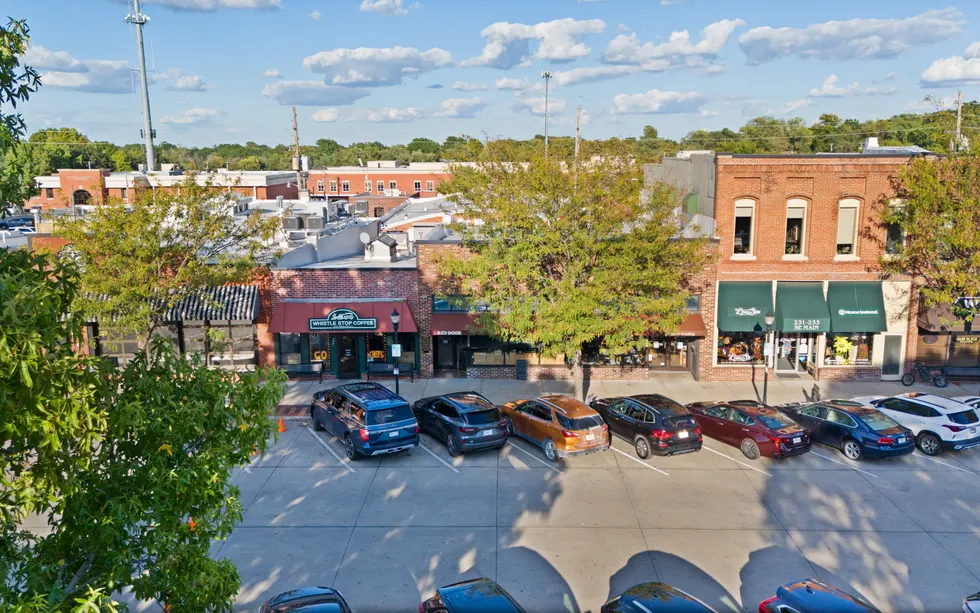
Georgetown leads with heritage. Its historic courthouse square — the “Most Beautiful Town Square in Texas,” with 180-plus historic buildings — is a real, walkable downtown today, complete with events like the spring Red Poppy Festival and home to Southwestern University, the oldest university in Texas. Georgetown feels established, charming, and rooted.
Leander leads with momentum. It is younger, newer, and still very much under construction — but that is the point. Its Northline district is building a walkable downtown from scratch beside the rail station, giving the city an urban core it never had. Leander feels like the future arriving; Georgetown feels like history preserved.
Edge: Georgetown for established charm and a finished downtown; Leander for new energy and a downtown in the making.
Amenities and Lifestyle
Both cities cover daily life well, with HEB-anchored retail, parks, and trails.
Georgetown adds standout draws: Lake Georgetown with its 26-mile Goodwater Loop trail, the river trail through town, and Sun City Texas, the largest 55+ active-adult community in the state with 9,900-plus homes and three championship golf courses. The city also runs on 100% renewable energy through its municipal utility. Learn more at the City of Georgetown site.
Leander counters with resort-style master-planned communities — Travisso, Bryson, Crystal Falls — and, again, the rail line and Northline. Explore city services at the City of Leander site.
Edge: Georgetown for lake recreation and active-adult living; Leander for resort subdivisions and transit-oriented amenities.
Who Each Suits
Leander is the better fit if you: commute toward Austin and want rail; crave new construction in amenity-rich communities; or want to buy into a walkable downtown that is still being built.
Georgetown is the better fit if you: want an established, historic small-town feel with a finished square; are shopping a slightly broader and more attainable price range; are 55-plus and drawn to Sun City; or want lake and trail recreation at the doorstep.
The Bottom Line
Leander and Georgetown are close cousins — fast-growing, school-strong, tax-friendly North Austin suburbs — but they sell different dreams. Leander offers rail access, resort subdivisions, and a downtown being born; Georgetown offers historic charm, a celebrated square, lake recreation, and a slightly gentler entry price. Neither is objectively better; the right choice tracks your commute, your taste in downtowns, and your budget. Whether you lean toward a Leander realtor or a Georgetown realtor, let those four factors — commute, schools, price, and vibe — make the call.
Market figures cited are approximate and current as of mid-2026; verify current data before making real estate decisions.