
Why people are moving to Leander
Leander has transformed from a small rail town into a destination for buyers priced out of central Austin who still want access to it. Population estimates have climbed past 87,000 in recent years and continue to rise, driven by job growth across the northwest corridor, new housing supply, and the appeal of a quieter pace within reach of the city.
What sets Leander apart from peer suburbs is the mix: newer homes, a strong school district, expanding retail, and the only commuter rail option in this part of the metro. For an overview of inventory and how a local agent approaches the market, see the Leander, TX real estate guide.
One practical note for newcomers: Leander straddles Williamson and Travis counties, so two homes a few minutes apart can sit in different counties, with different appraisal districts and slightly different tax pictures. Confirm which county your target address falls in early, because it affects where you file your homestead exemption and which tax office handles your bill. A local agent can flag this before you fall for a home without understanding its full cost.
The MetroRail commute option
If you're relocating for a job in or near downtown Austin, Leander's Capital MetroRail Red Line is worth a serious look. Leander Station is the line's northern terminus, with service running into downtown via stops near Lakeline and the Domain area. The rail option lets some commuters leave the car at home — but service days and schedules change, so confirm current times, fares, and parking with CapMetro and the City of Leander.
For drivers, the 183A toll road and US-183 carry most traffic toward Cedar Park and north Austin job centers. Commute times swing widely by time of day, so drive your actual route at rush hour before deciding. Buyers who prioritize rail access often start with MetroRail homes near Northline.
A realistic way to weigh the rail option is to think about your specific destination. If you work downtown or near a Red Line stop, the train can genuinely replace a stressful drive on most days. If your job is in a north Austin office park well off the line, the math may favor driving, and a community with quick toll-road access could serve you better. Neither answer is universal, which is exactly why testing both — on a normal workday, not a quiet weekend — is worth the time before you choose a neighborhood.
Schools: Leander ISD
Most of Leander is served by Leander ISD, regularly cited as one of the metro's stronger districts, especially at the middle and high school levels. As new campuses open to keep pace with growth, attendance boundaries shift — so the school a subdivision is "known" for today may change.
Verify the zoned campuses for any specific address with Leander ISD and review current report cards at txschools.gov. Treat school zoning as something to confirm in writing, not assume. Ratings and boundaries are not guaranteed; check with the district before you buy.
Neighborhoods to consider
Leander offers a wide range of settings and price points across its communities. A few starting points:
- Travisso — a Hill Country community with elevation, views, and resort-style amenities on the east side.
- Crystal Falls — an established, golf-oriented community in northwest Leander.
- Bryson — an award-winning community known for its resort pool and trail network.
- Deerbrooke, Palmera Ridge, Mason Hills, Larkspur, and Caballo Ranch — additional communities with varied builders and lot sizes.
Each carries its own amenity package, HOA structure, and cost layers. To compare them directly, see the best neighborhoods in Leander guide.
The settings differ more than the listings suggest. Travisso and Crystal Falls lean toward elevation, views, and larger lots on the city's edges, while communities nearer the rail district favor walkability and lower-maintenance living. Some communities are fully built out with mature landscaping; others are still adding sections, which can mean construction nearby and amenities that aren't finished yet. None of that is good or bad on its own — it's about matching the stage and setting of a community to what you want day to day. Touring several in person, at different times, tells you far more than a map ever will.
Retail, dining, and Northline
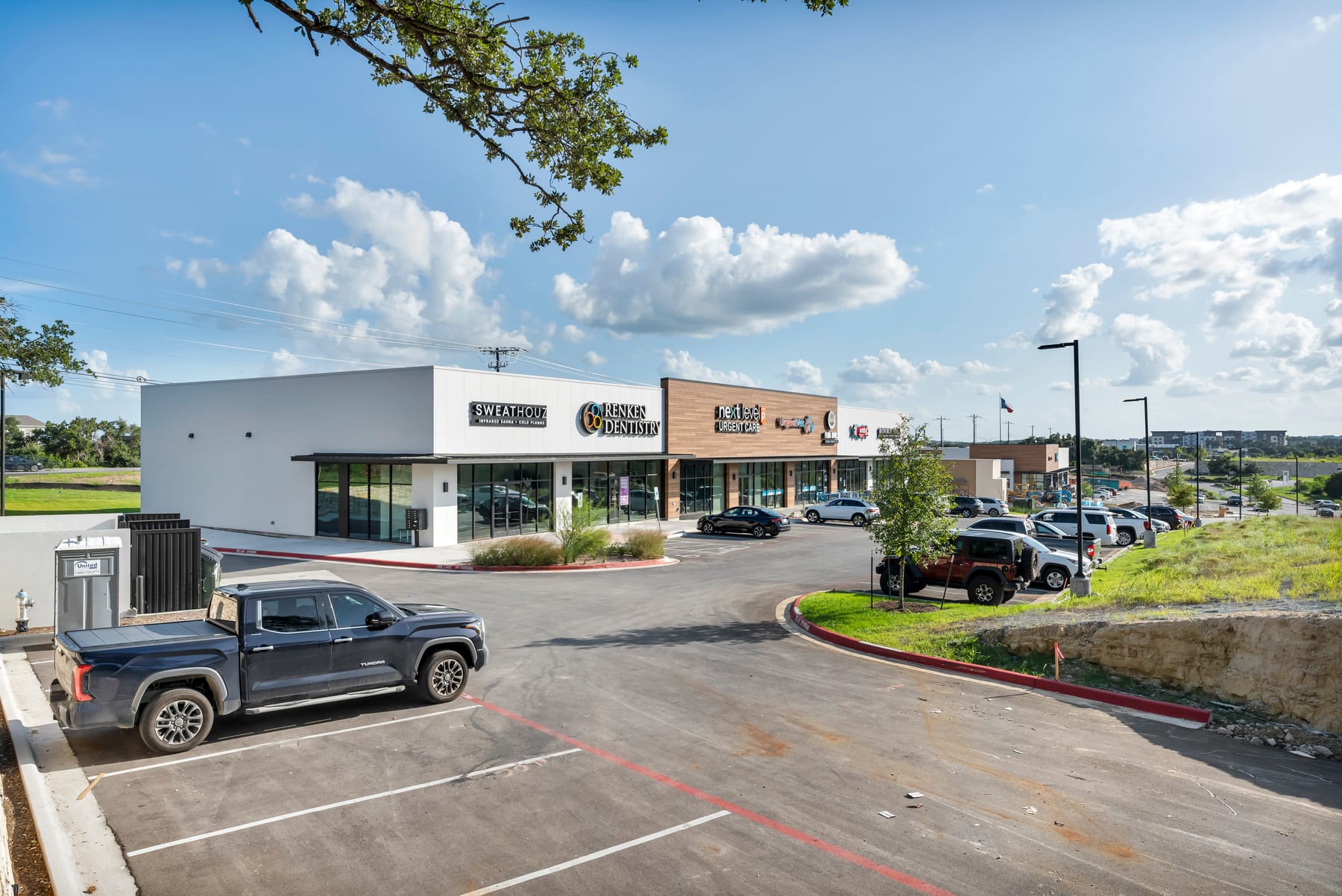
Leander's retail base has grown alongside its population. Established centers and nearby shopping in Cedar Park (including 1890 Ranch) serve daily needs, while Northline — a transit-oriented, walkable mixed-use district near the rail station — is adding retail, dining, residential, and public space in the heart of the city. For new arrivals who want a town-center lifestyle and easy rail access, Northline is a defining feature of where Leander is headed.
Cost of living and property taxes
Texas has no state income tax, which is part of the appeal, but property taxes run higher than the national average because they fund most local services. A Leander homeowner's total tax rate combines county, city, and school district rates, plus any MUD, PID, or ESD attached to the specific community. Because Leander spans Williamson and Travis counties, both the county rate and the appraisal district can vary by address.
Verify current figures with the right offices: Williamson Central Appraisal District and the Williamson County tax office for Williamson County addresses, or Travis County for Travis County addresses. Texas offers homestead, over-65, disabled, and disabled-veteran exemptions — confirm eligibility with the appraisal district or a tax professional. Home prices in the Leander area have run in a range higher than nearby Liberty Hill in recent years.
A relocation checklist for Leander
Use this as a starting framework, then confirm specifics with the relevant offices:
- Confirm the county your target address falls in (Williamson or Travis) — it affects taxes and homestead filing.
- Verify school zoning for the exact address with Leander ISD.
- Test your commute by rail and by car at the times you'd actually travel.
- Total the cost stack: property tax + HOA dues + any MUD or PID assessment.
- Compare new construction vs. resale on full cost of ownership, not just sticker price — see new construction homes in Leander.
- Check current market conditions (price and days on market) with a local agent.
- Tour multiple communities before narrowing — settings vary widely across the city.
- Verify exemptions you qualify for with the appraisal district or a tax professional.
Who Leander suits
Leander tends to fit buyers who want newer housing, a respected school district, and a real commute option into Austin, while accepting that prices generally sit above more rural neighbors. It suits those who value master-planned-community amenities and don't mind that some areas are still building out. Buyers who prefer an established small-town square or more land sometimes compare Leander with Georgetown or Liberty Hill, and those weighing a nearly identical neighbor often look at Cedar Park.