
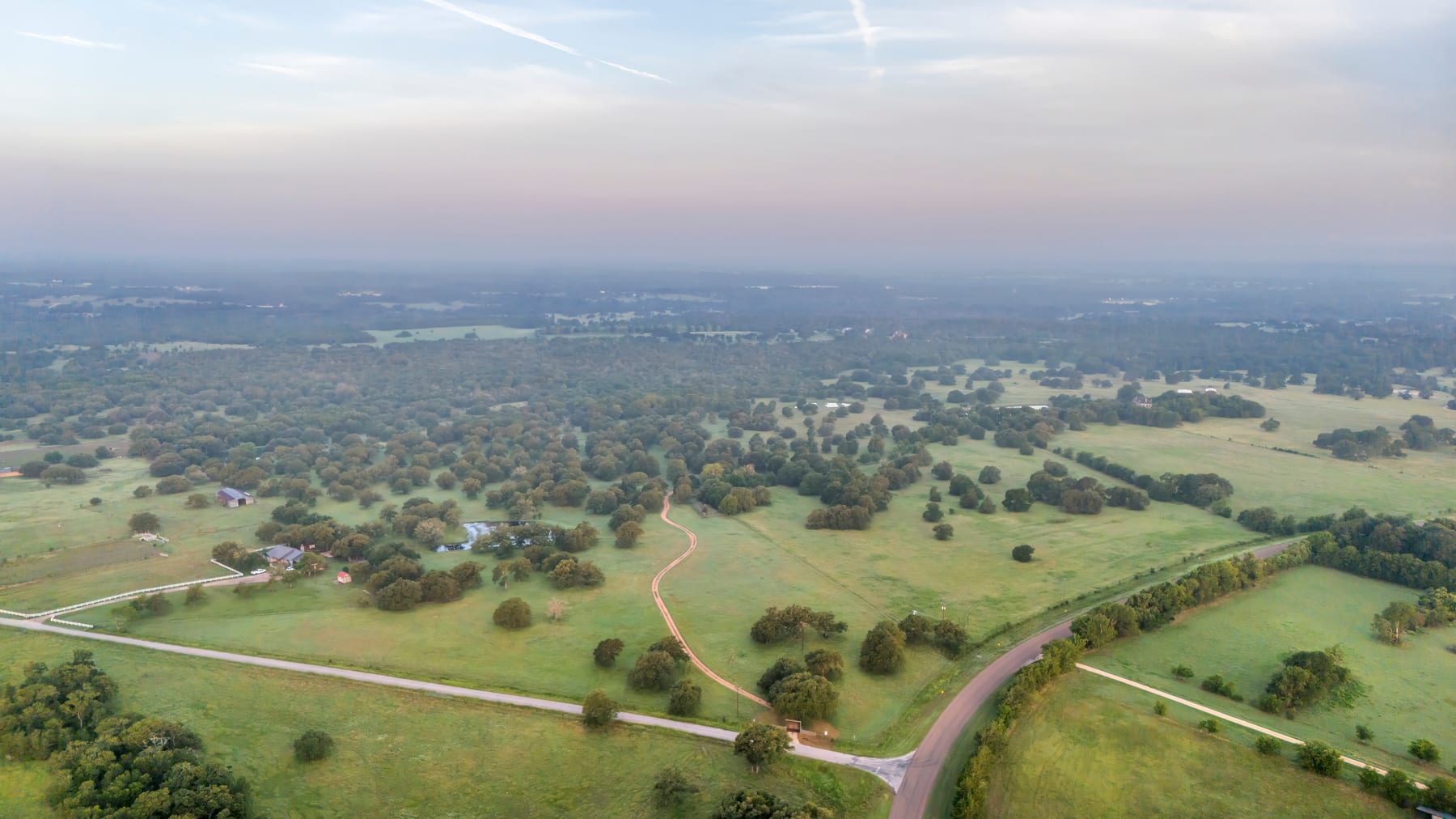
Thrall at a glance
Thrall is a small eastern Williamson County city on U.S. Highway 79, east of Taylor. Thrall ISD describes the district as serving a broad rural area that includes Thrall and nearby communities across 149 square miles.
The setting is agricultural and open, with a compact town center and surrounding farms, pasture, and rural homes. Buyers often compare Thrall with Taylor when deciding how much city access they need versus how much land and separation they want.
Housing and acreage choices
Inventory can range from in-town houses to homes on acreage, working land, and unimproved tracts. Older houses should be evaluated for condition, past additions, drainage, and utility updates. Rural tracts require a separate feasibility review for water, septic, electricity, access, and the planned homesite.
Flat, open land may look straightforward, but fencing, soil, drainage, floodplain, utility easements, pipelines, and agricultural valuation can materially change its use and cost. Use the Thrall homes and land guide for a deeper acreage checklist.
US 79 access and regional context
U.S. 79 is Thrall's primary connection to Taylor and the broader road network. That corridor is useful, but the practical commute still depends on the parcel's county-road access and the buyer's destination. Test the route at realistic times rather than relying on an ideal map estimate.
Taylor supplies many of the larger retail, healthcare, and service needs nearby. Buyers wanting more urban infrastructure should compare the Taylor real estate market; buyers prioritizing rural land can compare Thrall with Coupland and Granger.
Schools and utilities
Thrall ISD operates elementary, middle, and high-school campuses, but buyers must verify district boundaries and assignments by exact address. Rural mailing areas and district lines do not always match city boundaries.
The Public Utility Commission lists the City of Thrall as an active municipal water utility. Service remains address-specific: verify whether the property is inside the service area, whether a meter is available, and whether wastewater is municipal or on-site. Rural properties may still rely on a well, septic system, propane, and separate internet or trash providers.
Property-specific due diligence
- Drainage and floodplain: Evaluate the homesite, road access, ditches, culverts, and low areas using official mapping and an on-site inspection.
- Survey and easements: Confirm boundaries, legal access, utilities, pipelines, and any encroachments or mineral reservations.
- Water and wastewater: Verify municipal availability or inspect and permit private well and septic systems.
- Restrictions: Review limits on livestock, manufactured homes, commercial use, additional dwellings, and subdivision.
- Taxes: Confirm agricultural or wildlife valuation, school and emergency-service taxes, and rollback exposure if the land use changes.
- Financing and insurance: Match the loan and coverage to the actual property type, acreage, outbuildings, and rural systems.
Who Thrall tends to fit
Thrall tends to fit buyers who want an agricultural setting, a small local community, or more space while keeping a direct route toward Taylor. It is less suited to buyers who expect subdivision amenities or identical city-service availability at every address.
Start with the live Thrall property search, then verify the property systems and land-use details before treating acreage or a lower list price as the complete value picture.